YWW Meaning in Text and Why It Catches People Off Guard
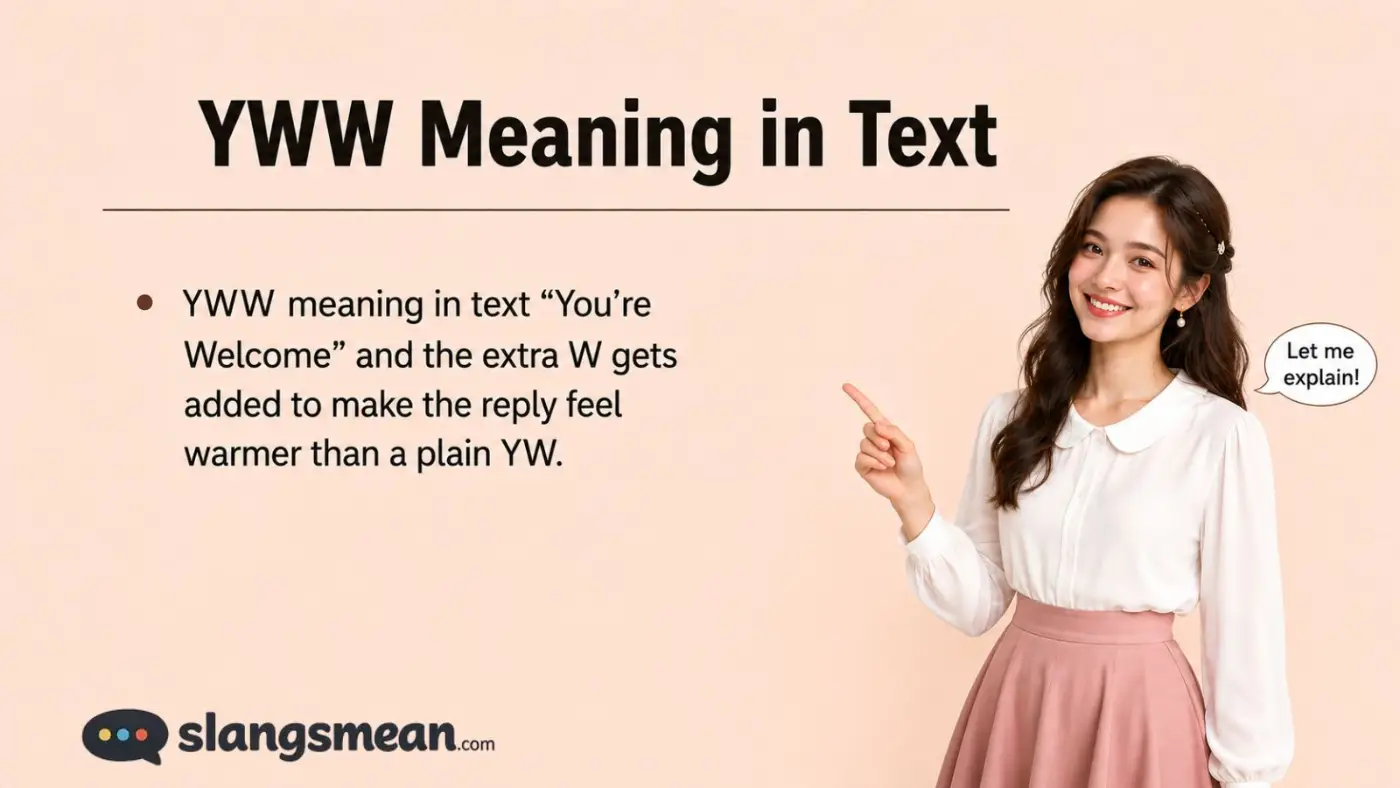
YWW meaning in text “You’re Welcome” and the extra W gets added to make the reply feel warmer than a plain YW. A smaller crowd also uses it to mean You Were Warned, tossed out when something predictable finally happens after someone ignored a heads up.
The phrase works like a small tone upgrade. Typing YW alone can feel a little flat or rushed, but stretching it to YWW signals you’re genuinely glad to help, not just closing out a thank you fast. That warmth is exactly why it caught on in casual chats where tone matters just as much as the words themselves.
Related Meaning: HBS Meaning In Text
Origin and Cultural Footprints
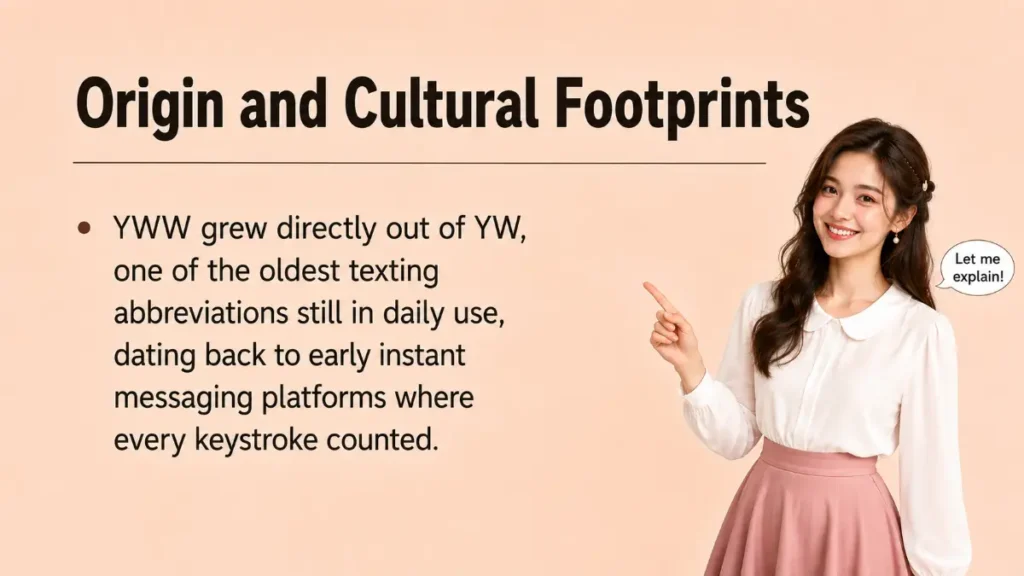
YWW grew directly out of YW, one of the oldest texting abbreviations still in daily use, dating back to early instant messaging platforms where every keystroke counted. People eventually noticed that doubling a letter added emotional weight without adding real typing effort, the same trick behind stretching thanks into thankssss. YWW picked up on that instinct and applied it to a reply that usually felt a little too short.
As texting moved from flip phones to full blown social platforms, the doubled letter habit spread everywhere. Snapchat, Instagram DMs, and group texts all embraced small stylistic tweaks like this because they let people add personality without writing more words. YWW became one of dozens of small variations built the same way, letters repeated purely for feeling rather than meaning.
Other Meanings of YWW
YWW doesn’t belong to one single phrase, and that split is exactly why searches around it get confusing fast. Depending on the conversation, those three letters can carry a completely different tone.
- You’re Welcome– the dominant meaning, used as a warmer response to thanks.
- You Were Warned– used semi playfully when a predicted problem finally shows up.
- Yeah Whatever Works– a rare and casual variant expressing loose agreement.
Why Does YWW Have So Many Different Definitions
Short abbreviations act like blank slates, and different groups fill them in based on whatever fits their situation best. Three letters can’t hold much meaning by themselves, so context ends up doing most of the real communicating. That’s not a flaw in modern texting, that’s just how compressed language naturally works when speed and tone both matter.
The doubling of that final letter adds even more room for interpretation. Some readers see it purely as emotional emphasis on You’re Welcome, while others associate the same letters with warning someone after the fact. Both groups keep typing YWW without ever comparing definitions, and the term ends up living two separate lives depending entirely on the sentence sitting right before it.
Does YWW Mean The Same Thing Outside The US
Mostly yes for the warmth angle, though frequency shifts by region. American texting culture leans heavily into stretched letters for emotional tone, so YWW as an extra friendly You’re Welcome shows up often in US group chats and DMs. In the UK, people are just as likely to type Ta or No Worries instead, so YWW feels a little less familiar there even though the warmth concept still lands.
In non English speaking countries, similar tone tricks exist using completely different letters or emojis, since stretching a word for warmth is a universal texting habit even when the actual abbreviation isn’t shared. The concept behind YWW, adding feeling through small stylistic choices, translates everywhere people text quickly. The specific three letters people reach for depends heavily on their local texting culture and habits.
Who Uses It Most
YWW doesn’t spread evenly across every kind of texter. Some groups reach for it constantly, others barely notice it exists.
| Group | How Often They Use YWW | Typical Reason |
|---|---|---|
| Gen Z texters | Very often | Adding warmth to casual replies |
| Content creators | Often | Friendly DM and comment replies |
| Gamers | Sometimes | Light teasing after a warned outcome |
| Professionals | Rarely | Too casual for formal messaging |
Real Conversation Examples Using YWW
Here’s how this plays out with actual people typing, not just sitting flat in a definition.
Example one, sent from one friend to another after helping them move apartments all weekend. Message: thank you so much for today, I couldn’t have done it without you. Reply: yww, anytime you need me. This lands as genuine warmth after real effort, so the reply should match that sincerity rather than feel rushed or automatic.
Example two, sent in a group chat after someone ignores advice and the predicted problem happens anyway. Message: ugh you were right, the printer jammed again. Reply: yww, told you last week. This one carries a playful I told you so tone, so the best response leans into the humor instead of getting defensive, something like lol okay fair, fixing it now.
Usage of YWW in Different Contexts
Meaning shifts depending on where YWW shows up, and reading the tone around it matters more than memorizing the letters. The same three characters can carry very different weight from one message to the next.
In everyday friendly exchanges, YWW usually softens a simple thank you into something warmer and more personal. Thanks for listening earlier. Yww, I’m always here.
In situations involving a missed warning, it shifts toward a lighthearted call out rather than genuine warmth. Yww, I literally said that would happen.
How Gen Z Uses YWW Today
For younger texters, YWW isn’t just a polite reply anymore, it’s become a small emotional dial people turn up or down depending on how close they are with someone. Doubling that letter signals real enthusiasm, while a plain YW can come across as distant or even a little cold in comparison. Tone control through spelling has become its own quiet skill.
It also works as a subtle identity marker inside friend groups. Typing YWW instead of the plain version shows you’re paying attention to how warmth gets communicated through text, not just what words technically mean. It’s a tiny signal that you care about how a message actually lands, not just what it says on paper.
Does YWW Mean Yes We Will
This mix up occasionally shows up in fast typed messages, especially when YWW appears without any surrounding thank you or warning context. Yes We Will isn’t an established meaning tied to this abbreviation, but confused readers sometimes guess at something confirmation related since the letters vaguely echo other agreement based phrases.
YWW as You’re Welcome has nothing to do with confirming plans or group decisions at all. The confusion mostly happens when someone encounters the abbreviation cold, without the thank you that usually comes right before it. If YWW shows up directly after someone says thanks, it’s almost always the warm reply version, not a confirmation of anything.
Meaning Across Social Media
Every platform bends slang a little differently, and YWW shifts tone depending on where it lands.
| Platform | YWW Meaning | How Its Used |
|---|---|---|
| Snapchat | You’re welcome | Quick warm replies to thanks |
| Instagram DMs | You’re welcome | Friendly one on one conversations |
| TikTok comments | You’re welcome | Replying warmly to grateful comments |
| You’re welcome | Personal chats among close friends | |
| Discord | You were warned | Playful callouts after predicted outcomes |
| Twitter or X | You’re welcome | Casual public replies to thanks |
Common Confusions
Because YWW is so short, it bumps into similar looking replies more often than longer slang usually does. A few mix ups repeat constantly.
- Confusing YWW with a simple typo of YW– when the extra letter is actually an intentional tone choice rather than a mistake.
- Mixing up the warm You’re Welcome meaning with the You Were Warned meaning– especially in messages lacking clear context.
- Assuming YWW always signals genuine warmth- when in teasing contexts it actually leans more sarcastic than sincere.
Related Slang Terms
- YW– meaning You’re Welcome.
- NP -meaning No Problem.
- NGL– meaning Not Gonna Lie.
- IKR– meaning I Know Right.
- TY– meaning Thank You.
How To Reply When Someone Says YWW
Scenario one, when YWW shows up as a warm response after you thanked someone for real help. Simply accept the warmth and move the conversation forward naturally, something like seriously means a lot, appreciate you.
Scenario two, when YWW appears in a teasing You Were Warned context after ignoring earlier advice. Lean into the humor instead of getting defensive, since pushing back usually just extends the joke, something like okay okay, you called it, happy now.
There’s a small emotional layer buried in this one too. Someone typing YWW after a genuinely hard favor, like helping through a rough week or a stressful move, is often saying more than a casual reply lets on. Sometimes that extra letter is the closest someone gets to saying I actually care about you without typing the words directly.
When Did YWW Go Mainstream
YWW never had one dramatic viral spike that pushed it into common use. It built up gradually alongside the broader habit of stretching letters for emotional emphasis, spreading the same patient way most texting shorthand does. By the early 2010s, doubled letter replies like this were common enough that most active texters recognized the warmth immediately without needing it explained.
Its mainstream arrival happened through steady repetition rather than a single trending moment. That pattern holds true for most slang with real staying power. Terms like this rarely explode overnight, they just get used constantly until the tone behind them becomes second nature to everyone typing it.
Conclusion
YWW means You’re Welcome with an extra dose of warmth in nearly every casual conversation you’ll run into. Context still shifts things occasionally toward the playful You Were Warned reading instead. It’s short, expressive, and does more emotional work than three letters should reasonably manage. Once you notice the pattern, you’ll read the warmth instantly every time.
FAQs
What Does YWW Mean in Text?
YWW means “You’re Welcome.” It’s a quick, friendly reply used after someone says “thank you” in a text message or online chat.
What Does YWW Mean in UK Slang?
In UK slang, YWW still means “You’re Welcome.” It isn’t exclusive to British slang but is understood in casual online conversations.
What Does YWW Mean on Social Media?
On social media, YWW stands for “You’re Welcome.” People use it in comments, DMs, and replies as a short and polite response.
What Does YWW Mean in Chat?
In chat, YWW means “You’re Welcome.” It’s commonly used to acknowledge someone’s thanks without typing the full phrase.
What Does YWW Mean on Instagram?
On Instagram, YWW means “You’re Welcome.” You’ll often see it in direct messages, comments, and story replies.
What Does YWWW Stand For?
YWWW is usually an extended version of YWW and still means “You’re Welcome.” The extra “W” is often added for emphasis or by mistake.
What Does YWW Mean in a Text Message?
YWW means “You’re Welcome.” It’s a casual texting abbreviation used after someone thanks you. It keeps conversations friendly while saving a few keystrokes.

Sophia Bennett writes educational content about English vocabulary, grammar, slang, and communication. She is passionate about making complex language topics accessible to students, professionals, and curious readers around the world.