DUH Meaning In Text: Everything Explained 2026
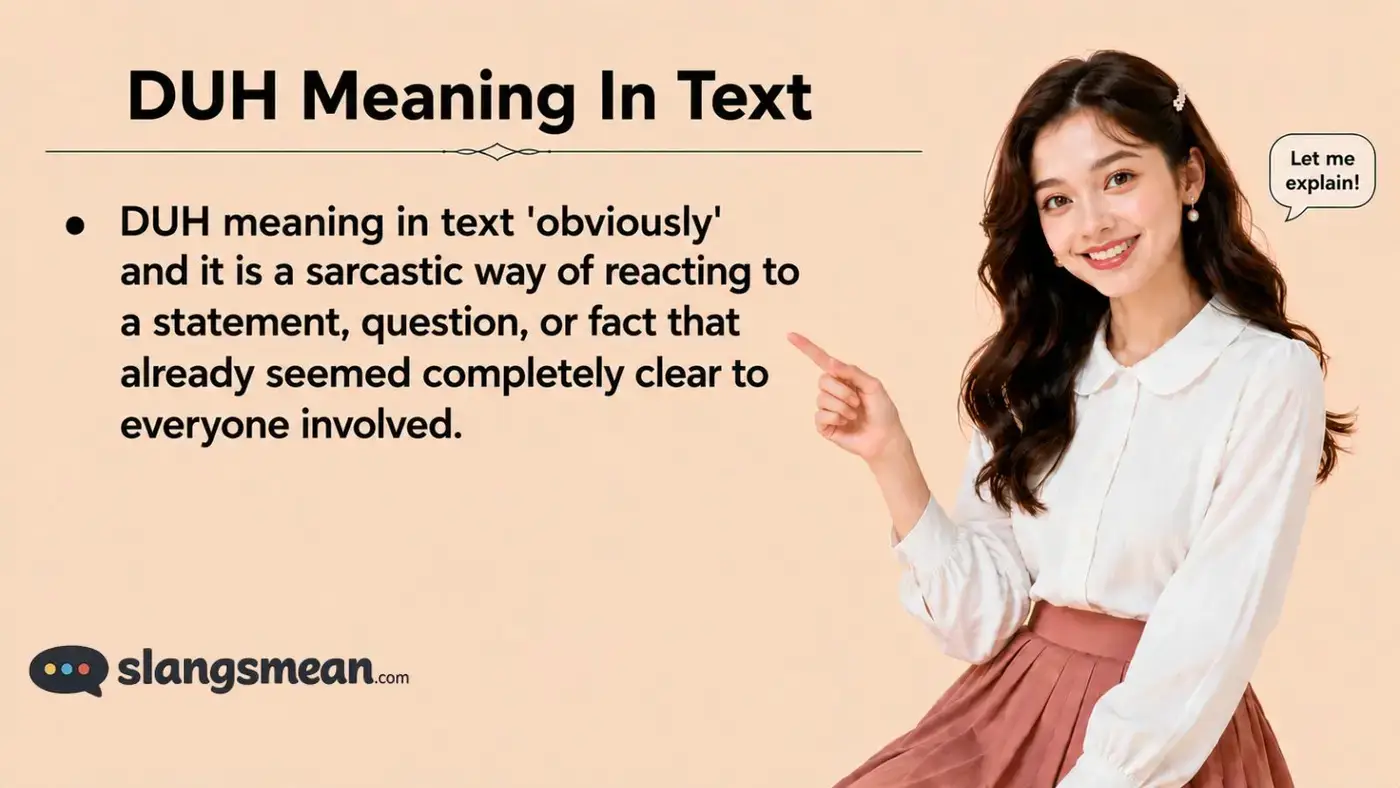
DUH meaning in text ‘obviously’ and it is a sarcastic way of reacting to a statement, question, or fact that already seemed completely clear to everyone involved. People type it when someone asks something that feels painfully obvious, almost like rolling your eyes through a single syllable.
You will see DUH constantly as a quick comeback after a question with an answer that should have been clear from the start. It carries playful sarcasm more often than real annoyance, especially among friends who already know they are being a little dramatic about it.
Origin and Cultural Footprints
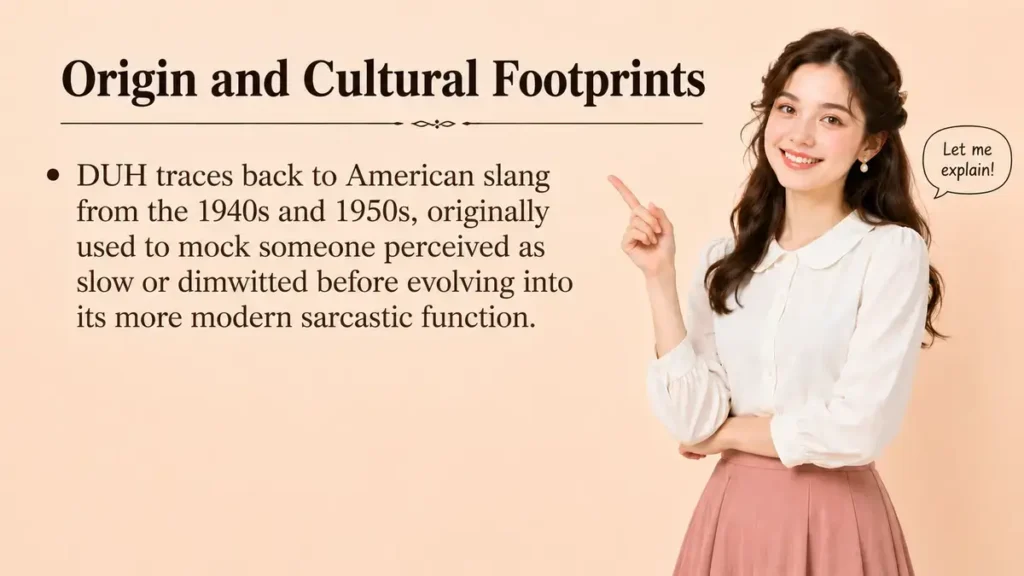
DUH traces back to American slang from the 1940s and 1950s, originally used to mock someone perceived as slow or dimwitted before evolving into its more modern sarcastic function. Cartoons and early television comedy picked it up heavily, often putting it in the mouths of comically clueless characters reacting to simple situations.
The word found new life in 1980s and 1990s teen culture, especially through movies and sitcoms where sarcastic teenagers used DUH as a quick verbal eye roll. Texting culture simply carried that established tone directly into digital conversations once typing replaced a lot of casual spoken back and forth between friends.
Other Meanings of DUH
DUH stays almost entirely locked into its sarcastic obvious statement function, though intensity and tone shift quite a bit depending on context.
- Genuine mild irritation — Sometimes carries real frustration rather than playful sarcasm, especially when someone repeats a question that was already clearly answered.
- Self deprecating use — Occasionally directed at yourself after realizing you missed something obvious, turning the sarcasm inward instead of toward someone else.
Why Does DUH Have So Many Different Definitions?
DUH does not really branch into separate unrelated definitions the way many abbreviations do, since it stays anchored to expressing obviousness no matter who says it or why. The real variation comes from tone and target rather than competing meanings.
This makes DUH fundamentally different from acronyms like FRM or TB, where context decides between genuinely different underlying phrases. Here, context mainly decides how sharp or playful the sarcasm actually feels in the moment.
Does DUH Mean the Same Thing Outside the US?
Yes, largely. American media exported DUH widely through movies, television, and music throughout the late twentieth century, helping the word travel into British, Australian, and Canadian English without much friction.
Non native English speakers also picked it up quickly, since the exaggerated tone and short, punchy delivery translate easily even without deep cultural context. The sarcastic function stays remarkably consistent wherever English speaking internet culture overlaps, regardless of country.
Who Uses It Most?
DUH skews toward casual conversations among friends, family, and especially teens who enjoy a little dramatic flair in their everyday texting.
Here’s a quick look at who reaches for DUH the most.
| Group | How They Use DUH |
|---|---|
| Teens and young adults | Reacting sarcastically to obvious questions from friends |
| Siblings and close family | Teasing each other over painfully clear statements |
| Content creators | Using exaggerated DUH reactions for comedic effect online |
Real Conversation Examples Using DUH
Here is how DUH plays out after a friend asks an obviously redundant question.
Text 1: “wait, are you actually coming to my birthday party” sent from Jess to her best friend Mia, who had confirmed attendance weeks earlier. Text 2: “duh, why would I miss it” replied Mia within seconds, clearly amused by the question. This exchange stays warm and playful, since both friends already knew the real answer before the question was even asked.
Here is a second example reacting to an obvious observation during a group chat debate.
Text 1: “wait, so pizza is basically just bread with toppings” sent from Carlos during a lighthearted group chat conversation about food. Text 2: “duh, that’s literally what pizza is lol” replied Tyler moments later, gently teasing the obvious statement. This version leans into harmless mockery, poking fun at stating something everyone already understood.
Usage of DUH in Different Contexts
In a casual friend group setting, DUH usually reacts to a question or statement that already had an obvious answer everyone shared.
“duh, of course I’m bringing snacks” This kind of message signals lighthearted sarcasm, reassuring the other person while gently teasing them for even asking.
In a slightly more frustrated context, DUH can carry genuine irritation rather than playful energy.
“duh, I already told you that twice” This version shows up when patience runs thinner, especially during repeated questions or miscommunication that starts to feel tedious.
How Gen Z Uses DUH Today
Gen Z treats DUH as a flexible reaction word, often stretching it out or pairing it with eye roll emojis to emphasize just how obvious something felt. The tone scales easily from gentle teasing to exaggerated sarcasm depending entirely on delivery.
There is an ironic, almost retro charm to DUH now too, since younger texters sometimes use it deliberately as a throwback to older slang, layering a bit of self aware humor on top of its already sarcastic function. Choosing DUH over newer slang can read as intentionally old school rather than outdated.
Does DUH Mean Someone Lacks Intelligence?
Not exactly, though that misunderstanding makes sense given the word’s older history mocking perceived slowness or confusion. Modern usage almost always targets the obviousness of a statement or situation rather than directly insulting someone’s intelligence.
This confusion usually fades quickly once context kicks in, since DUH today reads far more like a verbal eye roll than a genuine insult. Friends and family rarely mean real harm when reaching for DUH, even when the tone leans sarcastic rather than warm.
Meaning Across DUH Social Media
| Platform | DUH Meaning | How It’s Used |
|---|---|---|
| Twitter/X | Obviously | Sarcastic reply to a statement everyone already knew |
| TikTok | Obviously | Comment reacting to an overly obvious video claim |
| Obviously | Reply to a story or caption stating the obvious | |
| Snapchat | Obviously | Quick sarcastic response between friends |
| Discord | Obviously | Casual reaction during group chat conversations |
| Obviously | Comment mocking an unnecessary or obvious question |
Common Confusions
DUH rarely gets mixed up with unrelated meanings, though a handful of similar sounding words and tones occasionally cause minor confusion.
- DOH comes from Homer Simpson’s catchphrase, expressing self directed frustration rather than mocking someone else’s obvious question.
- HUH signals genuine confusion, the near opposite tone compared to DUH’s confident sarcasm.
- Tone misreadings can make DUH sound harsher in text than intended, especially without context clarifying playful versus genuine irritation.
- Overuse in arguments sometimes escalates tension, since repeated DUH responses can read as dismissive rather than lighthearted.
Related Slang Terms
- DOH — A self directed exclamation of frustration
- OBVIOUSLY — The full word DUH typically stands in for
- SMH — Shaking My Head
- NGL — Not Gonna Lie
- TBH — To Be Honest
- LOL — Laughing Out Loud
How to Reply When Someone Says DUH
If a friend responds with DUH in a playful, teasing way, the easiest move is just laughing along or matching their energy with a similarly sarcastic comment. Taking it too seriously usually kills the lighthearted vibe behind the exchange.
If DUH comes off with a sharper, more frustrated edge, acknowledging the repeated question or miscommunication helps smooth things over. A quick “sorry, missed that earlier” tends to defuse any real tension building behind the sarcasm.
When Did DUH Go Mainstream?
DUH became widely recognized throughout American pop culture during the 1980s and 1990s, riding alongside teen movies and sitcoms that leaned heavily on sarcastic dialogue. Its association with dramatic, eye rolling teenagers cemented the word firmly into everyday casual speech well before texting existed.
Once digital communication took over much of everyday conversation, DUH transitioned naturally into texting without losing any of its original sarcastic punch. It remains one of those rare slang terms that has barely shifted meaning across multiple decades, staying just as recognizable today as it was generations ago.
Conclusion
DUH means obviously, a sarcastic reaction to something that already felt clear. It grew out of mid twentieth century slang before becoming a staple of teen culture and texting alike.
Tone decides how sharp or playful it feels, ranging from gentle teasing to genuine irritation. Once you read the surrounding conversation, the energy behind DUH becomes obvious almost instantly.
FAQs
What does DUH mean in text?
DUH means “obviously” or “of course.” It is used to react to something that seems clear or self-evident.
When to say duh?
People say DUH when responding to an obvious statement or question, often in a playful or sarcastic way.
Does duh mean obviously?
Yes, DUH is commonly used to mean “obviously” or to point out that something should be easy to know.
Is the word duh rude?
DUH can sound slightly rude or mocking if used harshly, but friends often use it jokingly without offense.
Who is famous for saying duh?
The phrase became widely known through comedy, TV shows, and pop culture, with many comedians and characters using “duh” as a humorous expression.

Sophia Bennett writes educational content about English vocabulary, grammar, slang, and communication. She is passionate about making complex language topics accessible to students, professionals, and curious readers around the world.