JSP Meaning In Text: Origin, Examples and Usage 2026
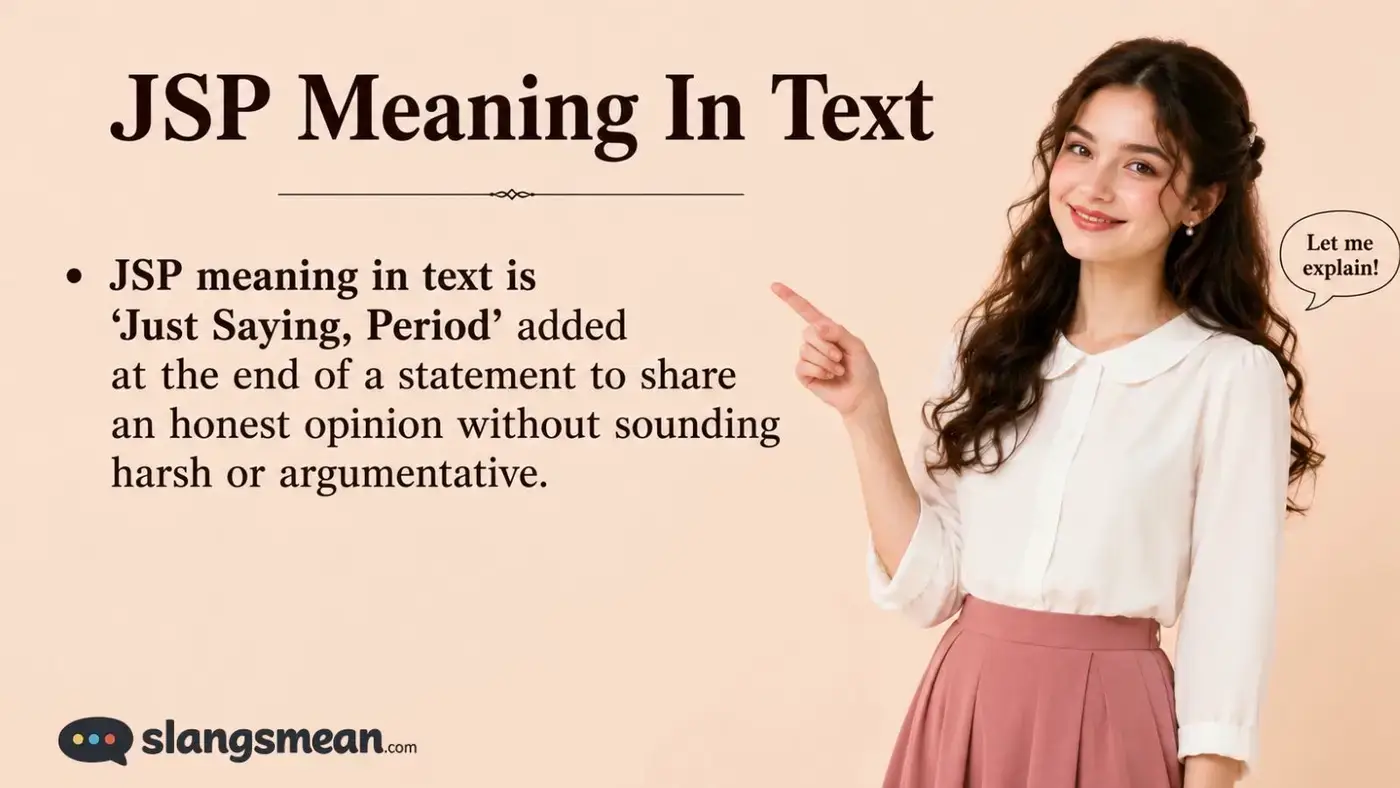
JSP meaning in text is ‘Just Saying, Period’ added at the end of a statement to share an honest opinion without sounding harsh or argumentative. People drop it right after stating something a little blunt, using it like a verbal shrug that says this is just how I feel, take it or leave it.
You will see JSP most at the end of an opinion someone wanted to state plainly but without picking a fight. It works as a tone softener, letting the sender be direct while still keeping the conversation friendly.
Origin and Cultural Footprints
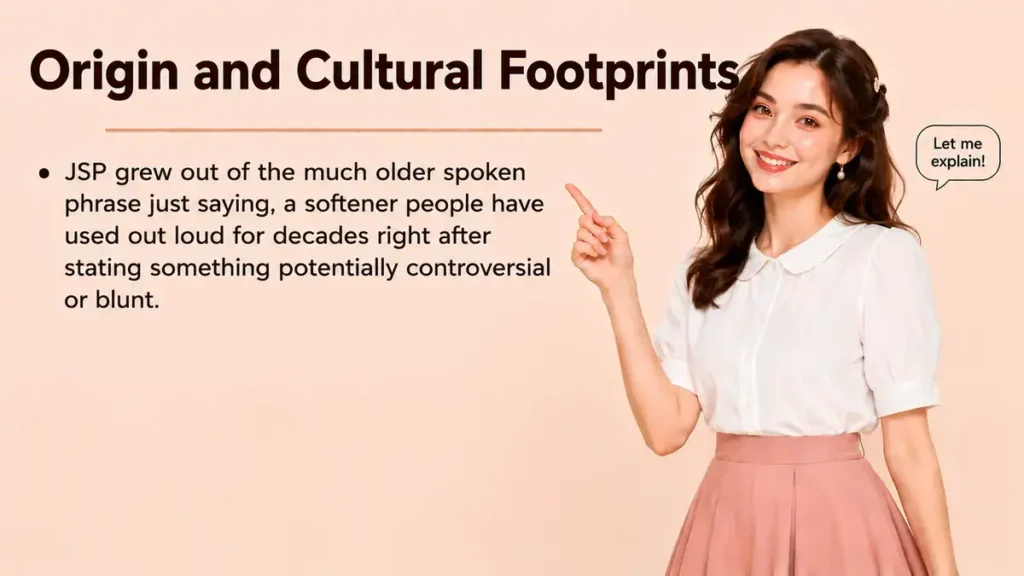
JSP grew out of the much older spoken phrase just saying, a softener people have used out loud for decades right after stating something potentially controversial or blunt. Texting culture eventually compressed that familiar phrase into three letters, adding the word period for extra emphasis and a sense of finality.
Social media comment sections helped push JSP into wider visibility throughout the early 2020s, especially on platforms like Instagram and TikTok where brief, punchy comments get rewarded over long explanations. It spread through everyday use rather than any single viral moment, blending naturally into casual texting vocabulary alongside older cousins like IMO and TBH.
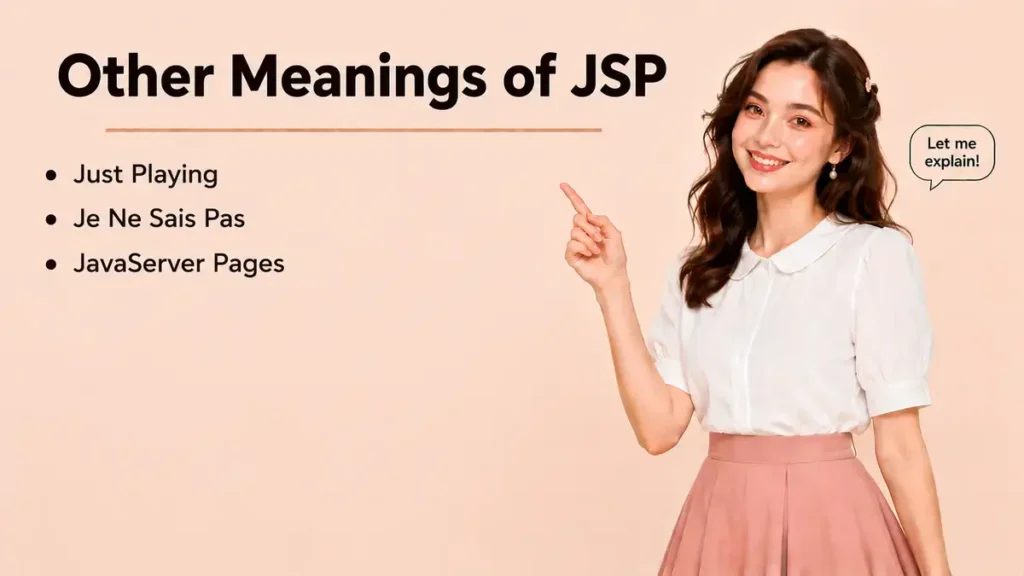
Other Meanings of JSP
JSP carries a few genuinely different meanings depending on the platform and audience, and not all of them are casual slang.
- Just Playing — A close cousin of JK, used to signal a joke or tease right after saying something that might otherwise sound serious.
- Je Ne Sais Pas — A French texting abbreviation meaning I don’t know, documented in language reference sources as legitimate shorthand among French speakers.
- JavaServer Pages — A well established web development technology introduced by Sun Microsystems in 1999, used to build dynamic web pages with embedded Java code.
Why Does JSP Have So Many Different Definitions?
JSP genuinely splits across several unrelated worlds, since casual English texting slang, French language abbreviation, and programming terminology all landed on the same three letters independently. Each context grew without any connection to the others, making JSP one of the more legitimately varied abbreviations out there.
Within English texting specifically, Just Saying Period dominates the most consistent and widely repeated reading across multiple sources, while Just Playing shows up as a real but secondary contender. Context, especially whether the conversation is in French, English, or a technical setting, almost always makes clear which meaning actually applies.
Does JSP Mean the Same Thing Outside the US?
Mostly yes for the English slang meaning, since just saying as a spoken softener translates easily across English speaking countries without needing cultural context. British, Australian, and Canadian texters use JSP in roughly the same tone softening way.
The French meaning, je ne sais pas, naturally stays specific to French speakers and French language texting rather than crossing into English conversations. The JavaServer Pages meaning remains identical everywhere as a standardized programming term, unaffected by region or language.
Who Uses It Most?
JSP spans a genuinely wide mix of users, given how differently the term functions depending on language and field.
Here’s a quick look at who reaches for JSP the most.
| Group | How They Use JSP |
|---|---|
| Gen Z and younger millennials | Softening blunt opinions in texts and social media comments |
| French speaking texters | Using the je ne sais pas meaning in casual chats |
| Web developers | Referring to JavaServer Pages in technical documentation |
Real Conversation Examples Using JSP
Here is how JSP plays out softening an honest opinion in a group chat about weekend plans.
Text 1: “I think we should skip the party this year, jsp” sent from Maya to her friend group chat after a few lackluster events recently. Text 2: “honestly agree, last year felt kind of forced” replied Devon shortly after, appreciating the direct but gentle opinion. This exchange stays light and honest, since the softener let Maya share a potentially unpopular take without sounding harsh.
Here is a second example using JSP to acknowledge a tricky question without a real answer.
Text 1: “do you think he actually likes her or is just being nice” sent from Priya to her friend Sam, genuinely curious about a mutual friend’s situation. Text 2: “jsp, honestly no idea, hard to tell with him” replied Sam a moment later, admitting uncertainty. This version leans toward the I don’t know reading rather than the opinion softening one, showing how much the surrounding question shapes the actual meaning.
Usage of JSP in Different Contexts
In a casual opinion sharing context, JSP usually follows a blunt statement to keep the tone friendly rather than confrontational.
“that movie was honestly overrated, jsp” This kind of message signals confidence in an opinion while still inviting disagreement without tension.
In a technical or professional context, JSP refers strictly to JavaServer Pages, carrying zero connection to tone softening or casual opinions.
“the backend still relies on JSP for a few legacy pages.” This version shows up in developer documentation and team discussions, completely separate from any texting slang usage.
How Gen Z Uses JSP Today
Gen Z treats JSP as a flexible tone tool, reaching for it specifically when they want to be honest without triggering a defensive reaction from whoever they are talking to. It solves a real communication gap, letting someone be direct while still signaling the comment is not meant as an attack.
There is a layer of social awareness built into modern usage too, since choosing JSP over a flatter statement shows some consideration for how the message might land. It pairs naturally with emojis in comment sections, softening criticism or opinions shared publicly rather than privately.
Does JSP Mean Just Playing?
Sometimes, and this reading shows up often enough across sources to count as a genuine secondary meaning rather than a rare exception. When JSP follows something that sounds like a joke or tease rather than a stated opinion, Just Playing becomes the more likely interpretation.
This overlap happens because both readings function as softeners, just for different things, one cushions an honest opinion while the other clarifies a joke. Reading the sentence right before JSP almost always clarifies which version applies, since an opinion reads differently than a tease.
Meaning Across JSP Social Media
| Platform | JSP Meaning | How It’s Used |
|---|---|---|
| Just Saying Period | Comment softening an honest opinion or observation | |
| TikTok | Just Saying Period | Caption or comment sharing a blunt take casually |
| Twitter/X | Just Saying Period | Quick reply stating an opinion without sounding harsh |
| Snapchat | Just Playing | Clarifying a joke or tease right after a message |
| Je Ne Sais Pas | Common among French speaking users expressing uncertainty | |
| Developer forums | JavaServer Pages | Referenced in technical discussions about web development |
Common Confusions
JSP trips people up against a handful of similar looking abbreviations and unrelated technical terms, especially when read without context.
- JS alone often means Just Saying without the added emphasis that Period brings to JSP.
- JK means Just Kidding, closely related to the Just Playing reading of JSP.
- JSP in tech contexts refers strictly to JavaServer Pages, never the casual texting meanings.
- French versus English usage can briefly confuse readers unfamiliar with the je ne sais pas meaning.
Related Slang Terms
- JS — Just Saying
- JK — Just Kidding
- TBH — To Be Honest
- IMO — In My Opinion
- IDK — I Don’t Know
- NGL — Not Gonna Lie
How to Reply When Someone Says JSP
If a friend adds JSP after sharing an honest opinion, the easiest reply just engages with the actual point rather than getting defensive about the delivery. The softener already signals they were not trying to start an argument, so responding calmly keeps the exchange productive.
If JSP follows something playful or joking, respond with the same lighthearted energy rather than taking the original statement too seriously. A quick laugh or playful comeback matches the teasing tone the sender was actually going for.
When Did JSP Go Mainstream?
JSP gained noticeable traction throughout the early 2020s, spreading through Instagram and TikTok comment sections as short form, tone conscious communication became increasingly valued. Search interest grew steadily during this period as more people encountered the term and looked it up for clarity.
By the mid 2020s, JSP had settled into regular rotation among younger texters across the United States, United Kingdom, and other English speaking regions. It remains useful precisely because it solves a real problem, expressing honesty without sounding harsh, which keeps it relevant even as other slang trends fade.
Conclusion
JSP most often means Just Saying Period, a way to share an honest opinion without sounding harsh. It can also mean Just Playing, depending entirely on what comes right before it.
Context decides everything, whether that is casual texting, French slang, or web development. Once you read the surrounding conversation, the right meaning behind JSP becomes obvious almost instantly.
FAQs
hat does JSP mean in text?
JSP most often means “Just Saying, Period.” People use it to emphasize an opinion or statement and show they have nothing more to add.
What is JSP in English?
In texting English, JSP stands for “Just Saying, Period,” meaning “that’s my point” or “that’s all I’m saying.”
What does “I’m JSP” mean?
“I’m JSP” usually means “I’m just saying, period,” used when someone is sharing an opinion without wanting to argue.
What is JSP in Snapchat?
On Snapchat, JSP typically means “Just Saying, Period” and is used in chats, captions, and snaps to stress a comment.
What is JS in Gen Z slang?
JS usually means “Just Saying.” It’s a casual way to add an opinion or observation without sounding too serious.

Sophia Bennett writes educational content about English vocabulary, grammar, slang, and communication. She is passionate about making complex language topics accessible to students, professionals, and curious readers around the world.