DTTM Meaning In Text: My Wife Often Use It
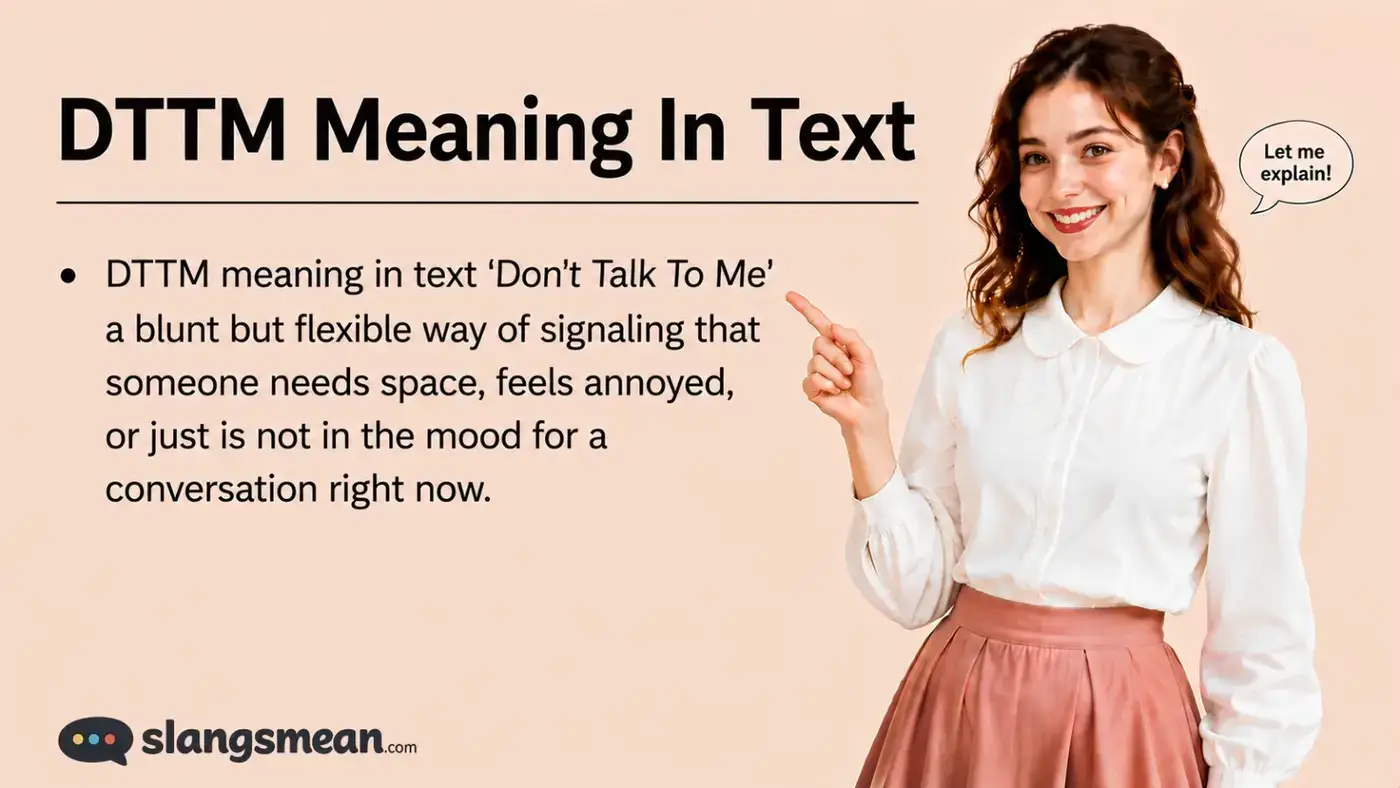
DTTM meaning in text ‘Don’t Talk To Me’ a blunt but flexible way of signaling that someone needs space, feels annoyed, or just is not in the mood for a conversation right now. People type it when they want to communicate a boundary quickly, whether that boundary is completely genuine or slightly dramatic for comedic effect.
You will see DTTM right after something frustrating happens, following an argument, or used playfully among close friends who enjoy a little theatrical irritation. The tone swings from fully serious to completely ironic depending on the surrounding context and whatever emoji follows it.
Related Post: DUH Meanings
Origin and Cultural Footprints
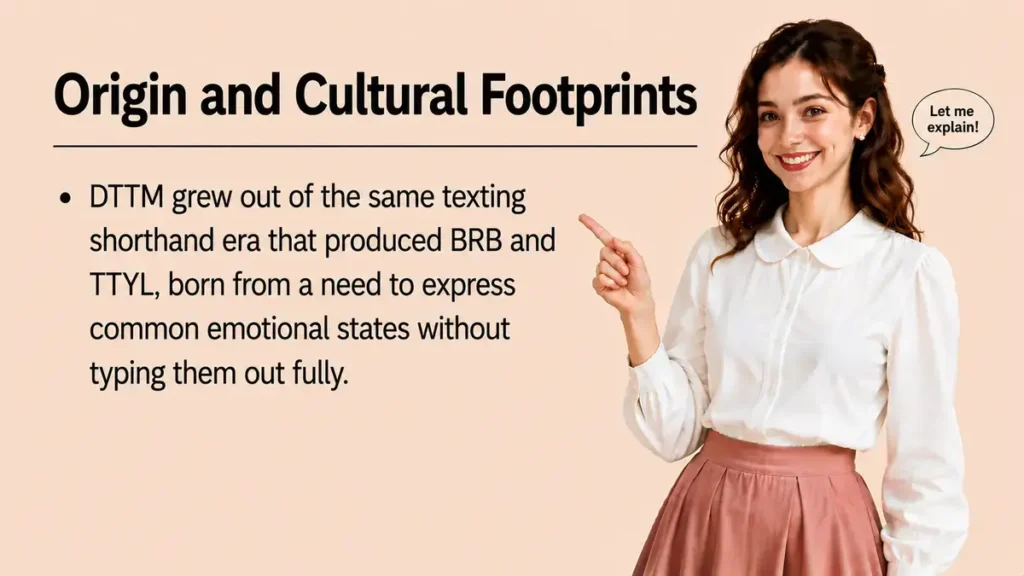
DTTM grew out of the same texting shorthand era that produced BRB and TTYL, born from a need to express common emotional states without typing them out fully. The phrase don’t talk to me already existed in everyday spoken English, so compressing it into four letters for texting was a natural next step.
Group chats and messaging apps throughout the 2010s helped spread DTTM, since expressing frustration or needing a break from conversation happens in nearly every close relationship. Its flexibility, covering everything from mild playful annoyance to genuine requests for space, helped it stay useful across multiple situations rather than getting tied to one specific tone.
Other Meanings of DTTM
DTTM carries two additional, genuinely documented meanings depending entirely on context, one from casual slang and one from the professional technical world.
- Doing Too Much — A second texting meaning used when someone is overreacting, overcomplicating, or putting unnecessary effort into something that does not require that level of intensity.
- DateTime or Date-Time Stamp — A technical computing and database term referencing a data format that records both the date and time of an event, used in software development, system logs, aviation records, and medical documentation.
Why Does DTTM Have So Many Different Definitions?
The two slang meanings, Don’t Talk To Me and Doing Too Much, developed separately within overlapping online communities, both growing from common spoken phrases that made obvious sense to shorten for texting. Neither crowds out the other in a confusing way since they tend to show up in noticeably different types of conversations.
The technical DateTime meaning predates both slang readings entirely, rooted in computing terminology used by developers and data professionals long before DTTM showed up in anyone’s text messages. Context separates the three meanings almost instantly once you know what to look for.
Does DTTM Mean the Same Thing Outside the US?
Mostly yes for both slang readings, since don’t talk to me and doing too much both translate easily across English speaking countries without needing specific cultural context. British and Australian texters use both in recognizable ways.
The Date Time technical meaning stays completely consistent worldwide, since computing terminology gets standardized across the entire software development industry regardless of country. Any developer anywhere who sees DTTM in a technical document immediately understands the data format reference.
Who Uses It Most?
DTTM spans several genuinely distinct groups, with the slang meanings skewing young and the technical meaning belonging entirely to professional and developer communities.
Here’s a quick look at who reaches for DTTM the most.
| Group | How They Use DTTM |
|---|---|
| Teens and Gen Z | Signaling frustration or needing space in casual texting |
| Close friend groups | Using it playfully and ironically after minor annoyances |
| Developers and data professionals | Referencing DateTime formatting in technical documentation |
Real Conversation Examples Using DTTM
Here is how DTTM plays out after a friend pushes a topic that already feels settled.
Text 1: “but seriously, why didn’t you just tell them the truth from the start” sent from Marcus to his friend Devon, revisiting an argument they had already closed. Text 2: “dttm right now, I handled it, let it go” replied Devon a moment later, clearly done with the subject. This exchange stays sharp and direct, since the response signals a real boundary rather than playful annoyance.
Here is a second example using DTTM in the completely unrelated technical sense.
Text 1: “what format are you using for the timestamps in the database” sent from a junior developer to their team lead during a code review. Text 2: “use DTTM for all transaction records, keeps everything consistent across tables” replied the team lead shortly after, referencing the standard format. This version carries zero emotional charge, existing entirely as practical technical instruction.
Usage of DTTM in Different Contexts
In a casual texting context, DTTM communicates a need for space or signals mild exasperation, with tone ranging from genuine to completely ironic.
“just failed my exam, dttm right now“ This kind of message signals real frustration and asks for quiet support rather than follow up questions or unsolicited advice.
In a technical computing context, DTTM refers strictly to DateTime formatting, a specific data type used across databases, log files, and software systems.
“the DTTM field stores transaction timestamps for audit trail compliance” This version shows up in technical documentation, code comments, and developer conversations, completely separate from any emotional texting context.
How Gen Z Uses DTTM Today
Gen Z treats DTTM as a mood marker as much as a communication request, often stretching its meaning playfully far beyond any genuine request for silence. A pair of laughing emojis after DTTM signals the annoyance is completely theatrical, while a stark message with no emoji suggests the sender actually means it.
There is subtle tonal fluency involved in reading DTTM correctly today, since the same letters can mean I genuinely need space right now or you are being so dramatic and I love you for it depending on nothing more than context and relationship history.
Does DTTM Mean Something Positive?
Not usually, though it gets used in affectionate or joking ways that strip away the negative charge. The core meaning always involves some version of I am done with this conversation or this situation right now, even when that statement is delivered with humor.
This is worth knowing because DTTM can land harsher than intended if the recipient does not share the sender’s playful intent. A well-placed emoji usually handles that gap, but without one, DTTM risks reading more abrupt than the sender meant.
Meaning Across DTTM Social Media
| Platform | DTTM Meaning | How It’s Used |
|---|---|---|
| Don’t Talk To Me | Reacting to frustrating situations in personal chats | |
| Snapchat | Don’t Talk To Me | Sending after a petty annoyance between close friends |
| Don’t Talk To Me | Comment or story reaction to overwhelming or irritating content | |
| Twitter/X | Don’t Talk To Me | Replying sharply to something frustrating in public threads |
| Discord | Doing Too Much | Telling a teammate they are overcomplicating a simple situation |
| Dev forums | DateTime | Standard technical abbreviation in database and code discussions |
Common Confusions
DTTM trips people up in a few specific ways worth knowing about before responding to one.
- Serious versus playful tone is the most common confusion, since the same four letters carry completely different weight depending on emoji and context.
- DTTM in technical documents refers strictly to DateTime, never the emotional slang meanings.
- Doing Too Much versus Don’t Talk To Me represent two genuinely different slang readings that serve different conversational purposes.
- Taking it too literally when it is clearly ironic leads to unnecessary tension, especially among friends who use it jokingly.
Related Slang Terms
- TTYL — Talk To You Later
- BRB — Be Right Back
- GTG — Got To Go
- NVM — Never Mind
- LMK — Let Me Know
- DNR — Do Not Reply
How to Reply When Someone Says DTTM
If DTTM arrives with a laughing emoji or in a clearly joking context, matching the playful energy with something equally dramatic usually lands well. Treating theatrical annoyance as if it were a genuine crisis makes things awkward fast.
If DTTM shows up with no emoji and a clearly frustrated tone, giving the person actual space is the right move. A simple acknowledgment that you heard them, followed by quiet, works far better than pushing for more conversation when the request is genuine.
When Did DTTM Go Mainstream?
DTTM developed alongside the broader wave of texting shorthand that grew throughout the 2000s and into the 2010s, spreading through group chats and messaging apps as abbreviating emotional expressions became normal digital habit. It never needed a single viral moment, since needing space from a conversation is a universal experience.
The technical DateTime usage predates the slang version by years, rooted in computing standards that predate social media entirely. Both meanings continue to coexist comfortably today, separated cleanly by context rather than causing any real confusion in practice.
Conclusion
DTTM means don’t talk to me, a quick way to signal needing space or expressing frustration. It can also mean doing too much, or refer to Date Time formatting in technical contexts.
Tone and context decide the exact meaning in nearly every case. Once you read the surrounding conversation, the intent behind DTTM becomes obvious almost instantly.
FAQs
What does DTTM mean in text?
DTTM most commonly means “Don’t Talk To Me.” People use it to show they want space, are upset, or don’t want to continue a conversation.
What is DTTM in slang?
In slang, DTTM stands for “Don’t Talk To Me.” It expresses frustration, annoyance, or a desire to be left alone.
What does DTM mean in Gen Z?
DTM can have different meanings depending on the context. It often means “Doing Too Much,” describing someone who is being overly dramatic or excessive.
What does TDTM mean in texting?
TDTM is not a widely recognized texting abbreviation. Its meaning depends on the conversation, and it has no standard definition.
What does DGMT mean in texting?
DGMT usually stands for “Don’t Get Me Twisted.” It’s used to tell someone not to misunderstand or misrepresent what the sender means.

Sophia Bennett writes educational content about English vocabulary, grammar, slang, and communication. She is passionate about making complex language topics accessible to students, professionals, and curious readers around the world.