ICL Meaning In Text: Origin, Examples and Usage 2026
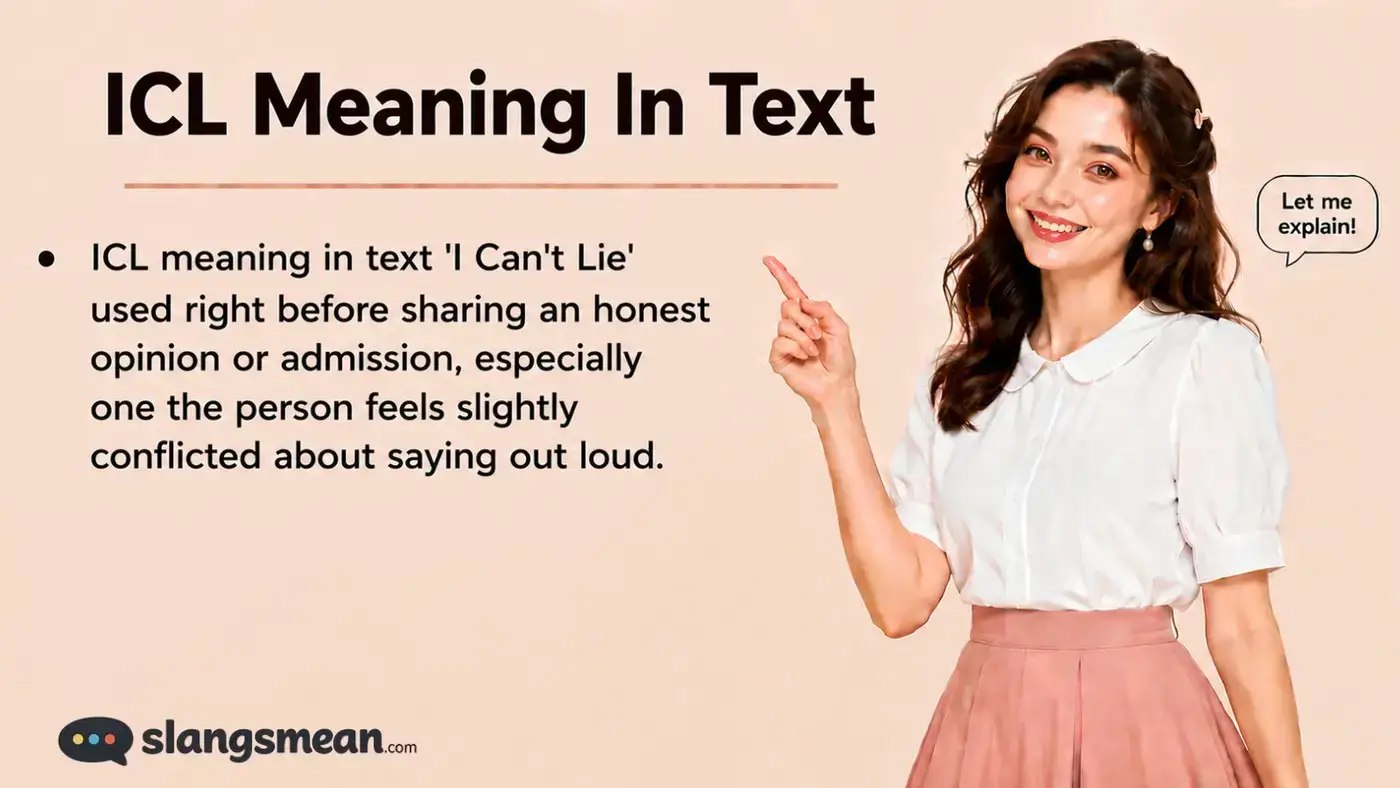
ICL meaning in text ‘I Can’t Lie’ used right before sharing an honest opinion or admission, especially one the person feels slightly conflicted about saying out loud. People drop it at the start of a sentence to signal genuine honesty is coming, even if that honesty feels a little awkward or unpopular.
You will see ICL most opening a confession, a blunt take, or a moment of vulnerability between friends. It works like a verbal deep breath before admitting something real, setting up whatever follows as sincere rather than exaggerated.
Origin and Cultural Footprints
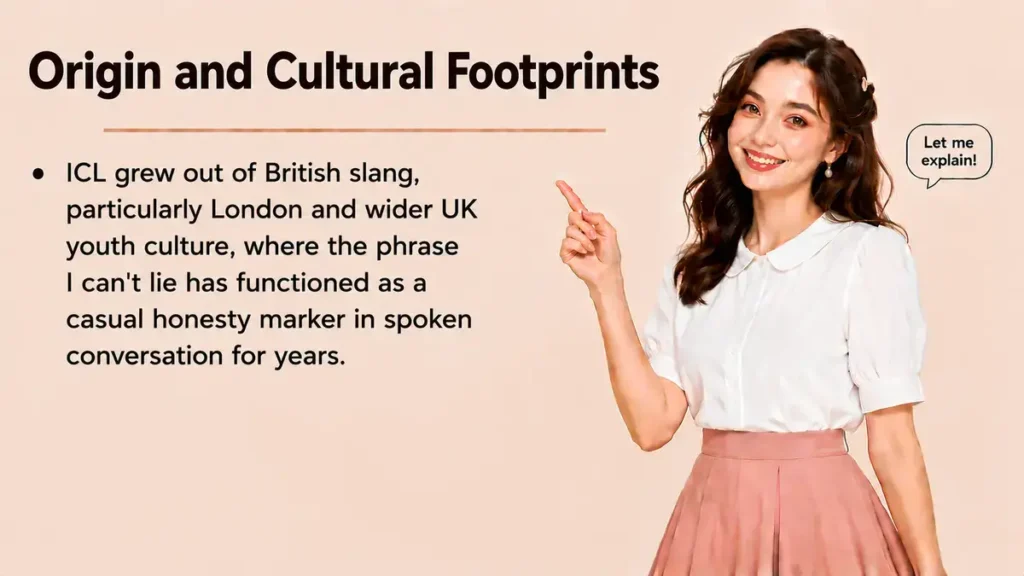
ICL grew out of British slang, particularly London and wider UK youth culture, where the phrase I can’t lie has functioned as a casual honesty marker in spoken conversation for years. Grime and UK rap culture helped popularize the phrase well before texting compressed it down into three letters.
Social media throughout the 2010s and into the 2020s carried ICL across the Atlantic, with British creators on Twitter and TikTok introducing American audiences to the phrase through music, comments, and viral clips. It settled into broader English speaking internet culture once American Gen Z users picked it up alongside other UK slang crossing over through shared platforms.
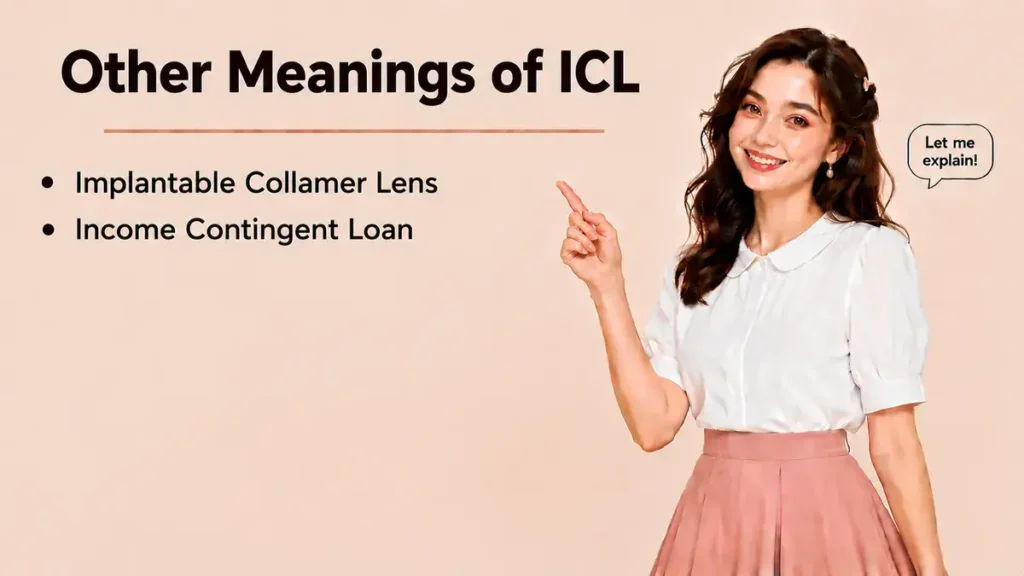
Other Meanings of ICL
ICL carries a couple of unrelated meanings outside casual texting, showing up in specific professional and financial contexts instead.
- Implantable Collamer Lens — A type of vision correction surgery alternative to LASIK, used in ophthalmology and eye care discussions.
- Income Contingent Loan — A financial term referencing certain student loan repayment structures, particularly common in countries like Australia and the UK.
Why Does ICL Have So Many Different Definitions?
The casual texting meaning dominates by a wide margin within everyday conversation, since I Can’t Lie shows up consistently across slang reference sources tracking its British origins and spread into mainstream Gen Z vocabulary. The medical and financial meanings stay confined entirely to their own professional fields, rarely overlapping with casual conversation in any confusing way.
This makes ICL fairly easy to navigate despite technically carrying multiple meanings, since context resolves which reading applies almost instantly. Nobody discussing eye surgery or student loan repayment plans is likely to confuse that conversation with a friend sharing a blunt opinion over text.
Does ICL Mean the Same Thing Outside the US?
Yes, and actually more so outside the US originally, since ICL started specifically as British slang before crossing over into American texting culture. UK and broader European English speaking audiences have used the phrase consistently for longer than American audiences have.
American Gen Z picked up ICL more recently, largely through social media exposure to British creators, music, and viral content. The phrase now reads as fairly universal across English speaking internet culture, even though its roots trace specifically back to the UK.
Who Uses It Most?
ICL skews toward younger texters comfortable with British slang crossover, especially those active on platforms where UK creators have significant influence.
Here’s a quick look at who reaches for ICL the most.
| Group | How They Use ICL |
|---|---|
| British Gen Z texters | Sharing honest opinions casually in everyday conversation |
| American Gen Z and younger millennials | Adopting the phrase through social media crossover |
| Content creators | Using ICL to soften bold takes or honest reactions online |
Real Conversation Examples Using ICL
Here is how ICL plays out admitting a genuine opinion between friends.
Text 1: “be honest, did you actually enjoy that concert” sent from Zara to her friend Leah after a recent show they both attended. Text 2: “icl it was kind of underwhelming for the price we paid” replied Leah a moment later, softening her unpopular take. This exchange stays honest and low pressure, since the opener let Leah share a genuine criticism without sounding overly harsh.
Here is a second example admitting something slightly personal in a group chat.
Text 1: “anyone else struggling to focus today” sent from Marcus to his friend group chat during a particularly unmotivated afternoon. Text 2: “icl I haven’t done anything productive since this morning” replied Devon shortly after, admitting the truth casually. This version leans into shared honesty, using ICL to make the confession feel relatable rather than embarrassing.
Usage of ICL in Different Contexts
In a casual opinion sharing context, ICL usually opens a take that might otherwise feel a little blunt or unpopular to admit outright.
“icl this show went downhill after season two” This kind of message signals a genuine but slightly hesitant opinion, inviting agreement or pushback without sounding overly confrontational.
In a more personal or reflective context, ICL can soften an admission that feels a little vulnerable to share honestly.
“icl I’ve been struggling lately, just needed to say it” This version shows up when someone wants to express something real while still keeping the tone manageable rather than overly heavy.
How Gen Z Uses ICL Today
Gen Z treats ICL as a built in honesty marker, reaching for it specifically when they want to signal genuine sincerity rather than exaggeration or sarcasm. It solves a real communication need, letting someone admit something true while flagging that the honesty itself might feel slightly uncomfortable to state plainly.
There is a layer of cultural awareness built into modern usage too, since recognizing and using British slang like ICL signals some fluency with UK internet culture rather than purely domestic American slang. It pairs naturally with casual punctuation, reinforcing the genuine, unguarded tone the phrase carries.
Does ICL Mean Something Different In Medical Contexts?
Yes, and this difference matters since ICL carries a completely separate, well documented meaning in eye care specifically. In medical and ophthalmology contexts, ICL stands for Implantable Collamer Lens, a vision correction procedure entirely unrelated to casual honesty markers in texting.
This distinction rarely causes real confusion, since medical discussions and casual texting conversations almost never overlap in a way that would blur the two meanings together. Reading the surrounding context, whether it involves eye surgery or a friend sharing an opinion, almost always makes the intended meaning obvious immediately.
Meaning Across ICL Social Media
| Platform | ICL Meaning | How It’s Used |
|---|---|---|
| TikTok | I Can’t Lie | Comment or caption sharing a genuine opinion |
| Twitter/X | I Can’t Lie | Quick reply opening an honest take |
| I Can’t Lie | Caption softening a relatable confession | |
| Snapchat | I Can’t Lie | Casual admission shared between close friends |
| Discord | I Can’t Lie | Sharing an honest opinion during group conversations |
| Medical forums | Implantable Collamer Lens | Referenced in discussions about vision correction surgery |
Common Confusions
ICL trips people up against a handful of similar looking abbreviations, especially when read quickly without context.
- NGL functions almost identically, though it originated more specifically within American slang rather than British.
- ICYMI stands for In Case You Missed It, completely unrelated despite sharing a similar three letter structure.
- ICL in medical contexts refers strictly to Implantable Collamer Lens, never the casual honesty marker.
- Regional unfamiliarity can briefly confuse American readers encountering ICL for the first time before recognizing the British slang.
Related Slang Terms
- NGL — Not Gonna Lie
- TBH — To Be Honest
- LWK — Low Key
- FR — For Real
- HONESTLY — A fuller version of the same sincerity marker
- DEADASS — Another way of emphasizing genuine seriousness
How to Reply When Someone Says ICL
If a friend shares something using ICL, the easiest reply just engages with the actual opinion rather than treating it as an overly dramatic confession. Responding casually matches the genuine, low key tone they intentionally chose.
If ICL comes attached to something more personal or vulnerable, offering genuine support without making the moment feel heavier than intended usually works best. A simple, warm response respects the honesty while keeping the conversation comfortable.
When Did ICL Go Mainstream?
ICL has functioned as casual British slang for years, growing alongside UK grime and rap culture long before social media accelerated its spread internationally. It never needed a single viral moment within Britain itself, since the phrase grew naturally out of everyday spoken conversation.
American Gen Z encountered ICL more visibly throughout the early 2020s, largely through TikTok and Twitter exposure to British creators and music crossing over into mainstream algorithms. It now sits comfortably alongside NGL and TBH as part of widely recognized honesty marker vocabulary across English speaking internet culture.
Conclusion
ICL means I can’t lie, a way to open an honest opinion or admission genuinely. It grew out of British slang before spreading into American texting through social media crossover.
Tone usually stays sincere rather than sarcastic, signaling real honesty behind whatever follows. Once you read the surrounding conversation, the genuine intent behind ICL becomes obvious almost instantly.
FAQs
What Does ICL Mean in Text?
ICL means “I Can’t Lie.” People use it before sharing an honest opinion, confession, or genuine feeling in a text message.
What Is ICL in Gen Z?
For Gen Z, ICL is a slang phrase meaning “I Can’t Lie” and is often used to keep conversations real and honest.
What Does ICL Stand For?
ICL stands for “I Can’t Lie.” It is commonly used on social media, texting apps, and online chats.
What Does PMO ICL Mean in Texting?
PMO ICL usually means “Pisses Me Off, I Can’t Lie.” It’s used to express annoyance or frustration honestly.
What Does ICL and SYBAU Mean?
ICL means “I Can’t Lie,” while SYBAU is internet slang that generally means “Shut Your B*tch Ass Up.” Both are popular terms in online conversations and social media.

Sophia Bennett writes educational content about English vocabulary, grammar, slang, and communication. She is passionate about making complex language topics accessible to students, professionals, and curious readers around the world.