WTV Meaning In Text: The Word That Ends A Conversation
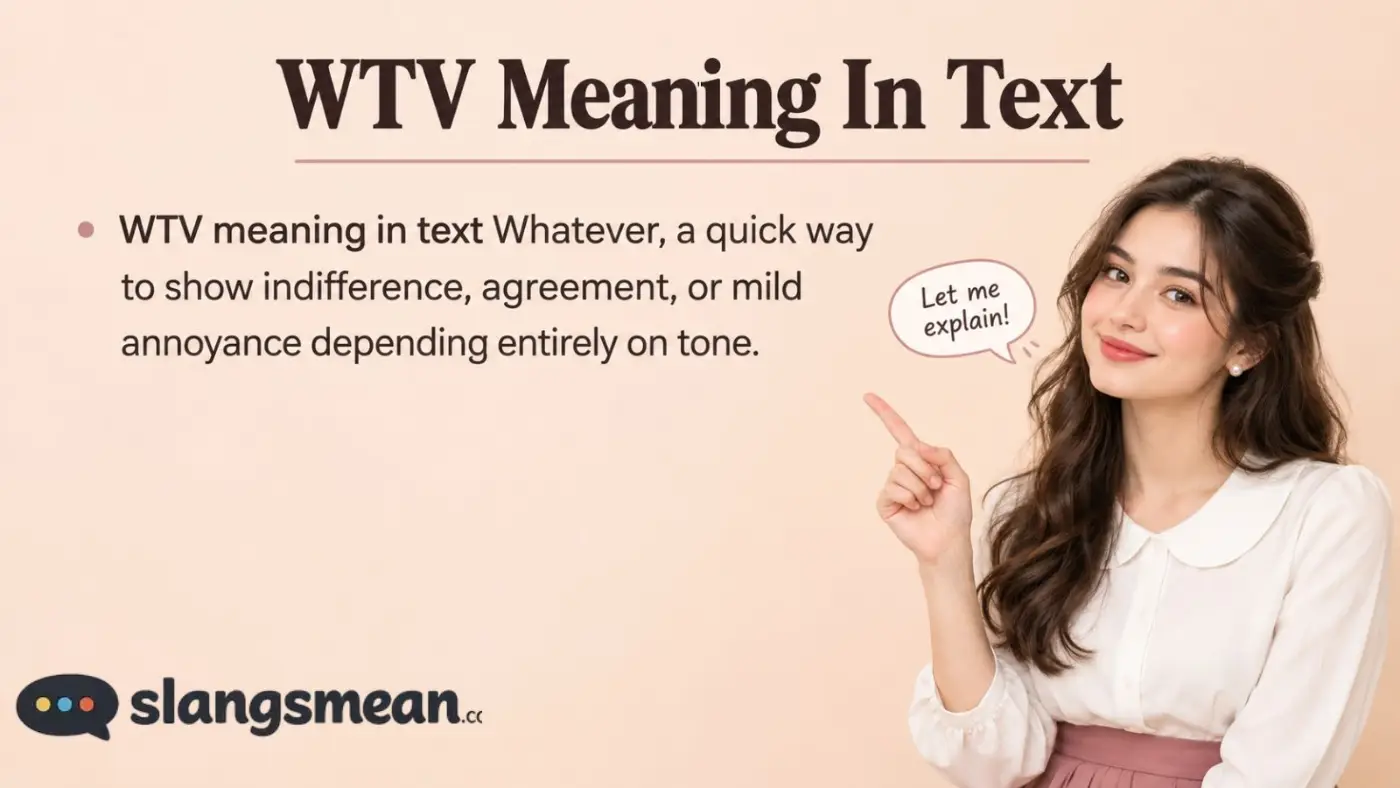
WTV meaning in text Whatever, a quick way to show indifference, agreement, or mild annoyance depending entirely on tone. It’s the texting shortcut for shrugging your shoulders without actually shrugging anything. People type it when they don’t have a strong opinion, or sometimes when they have a very strong opinion they’ve decided not to share.
It shows up constantly in casual texting, group chats, and comment replies. The tricky part is that WTV rarely means just one thing. Context does most of the actual explaining here.
Related Meaning: FYTB Meaning In Text

Origin And Cultural Footprints
WTV grew directly out of the spoken word whatever, a term that’s carried dismissive, indifferent energy in English for decades, especially since the 1990s when it became a defining piece of teen slang. Texting culture compressed it further, following the same efficiency driven pattern that shaped countless other abbreviations once typing speed became a priority.
As texting overtook phone calls for casual conversation throughout the 2000s, WTV spread quickly among teens and young adults who wanted the same dismissive tone without spelling out the whole word each time. It carried forward that same slightly rebellious, unbothered attitude the original phrase always had, just condensed into three letters instead of eight.
Other Meanings Of WTV
WTV mostly holds one dominant meaning, though tone creates real variation in how it actually lands.
- Genuine indifference — a true, neutral lack of preference about whatever’s being discussed.
- Passive aggressive dismissal — shutting down a conversation or disagreement without saying so directly.
- Casual agreement — sometimes used simply to confirm plans without needing enthusiasm behind it.
The letters stay identical across all three, but the emotional temperature behind them shifts completely depending on what came before it in the conversation.
Why Does WTV Have So Many Different Definitions
WTV doesn’t really carry competing definitions so much as one flexible word capable of expressing wildly different emotions depending on delivery. That flexibility isn’t new. The original phrase whatever has functioned exactly this way in spoken English for generations, long before texting ever shortened it.
Tone does nearly all the real work here, more than any dictionary definition ever could. The same three letters can sound relaxed and easygoing or cold and dismissive, and readers usually pick up on which version they’re getting almost instantly based on the conversation surrounding it.
Does WTV Mean The Same Thing Outside The US
Yes, WTV translates smoothly across English speaking countries without much distortion in meaning. The UK, Australia, Canada, and other English dominant regions all use it the same casual, dismissive way in everyday texting.
Where slight differences show up is cultural tolerance for that dismissive tone itself. Some regions read whatever, and by extension WTV, as more openly rude or confrontational, while others treat it as a fairly mild, low stakes way to end a conversation without much drama attached.
Who Uses It Most
WTV shows up across a wide range of ages, though certain groups reach for it more instinctively than others.
| Group | Typical Usage | Frequency |
|---|---|---|
| Teens | Dismissive replies during arguments | Very common |
| Young adults | Casual agreement in plans | Common |
| Gamers | Quick reactions during matches | Occasional |
| Professionals | Workplace communication | Essentially never |
It’s fundamentally a peer to peer word, one that would sound jarring or unprofessional dropped into a formal email or workplace message.
Real Conversation Examples Using WTV
Here’s how WTV actually shows up in real texting situations people encounter regularly.
Example 1, casual plan making: “Should we get pizza or tacos tonight?” A friend replies “wtv, both sound good honestly.” This kind of exchange happens between people with genuinely low stakes involved, where the reply signals real flexibility rather than any hidden frustration. A natural follow up might be “okay tacos it is then” moving the plan forward easily.
Example 2, tension during an argument: “I really think you should have told me before making that decision.” The reply comes back “wtv, it’s already done anyway.” Here, WTV signals shutting the conversation down rather than genuine agreement, often masking real frustration underneath a falsely casual tone. This kind of response usually needs a calmer follow up like “I don’t want to just drop this, can we actually talk about it” to move past the dismissiveness.
Usage Of WTV In Different Contexts
In everyday casual texting, WTV often responds to a simple question without much emotional weight attached at all. “Movie night or just staying in?” Replying “wtv, I’m good either way” signals genuine ease rather than any deeper feeling.
In more tense or emotionally loaded exchanges, WTV can shut down a disagreement rather than actually resolving it. “I still don’t think that was fair to me.” Here, “wtv, forget it” carries real frustration, using casual language to mask a much less casual feeling underneath.
How Gen Z Uses WTV Today
Gen Z tends to layer WTV with irony almost as often as genuine indifference, using it half jokingly even when they do have an opinion they’re choosing not to voice. Typing wtv sarcastically after a ridiculous statement signals playful disbelief rather than actual apathy.
There’s also an identity element worth mentioning here. Using WTV casually can signal a certain unbothered, low effort energy that’s become almost aspirational within youth internet culture, projecting calm indifference even in moments that might actually carry more feeling than the word lets on.
Does WTV Always Mean Someone Doesn’t Care
No, and this assumption causes more misunderstandings than almost any other texting shorthand out there. While WTV can genuinely signal indifference, it just as often masks frustration, hurt, or disagreement someone doesn’t feel like explaining in the moment.
Reading tone and context matters enormously here. A WTV following a low stakes question about dinner plans probably means real indifference, while one following a serious conversation or disagreement almost certainly signals something being left unsaid rather than genuine apathy.
When Whatever Really Means I Give Up
There’s a quieter, heavier side to this small word worth naming directly. Sometimes WTV doesn’t show up because someone genuinely doesn’t care, but because they’ve simply run out of energy to keep explaining how they feel to someone who isn’t really listening.
Think about someone who’s brought up the same concern in a relationship multiple times, only to watch it get brushed aside again and again. Eventually, wtv becomes less about indifference and more about exhaustion, a quiet way of saying I don’t think this conversation is going anywhere anyway. That tiny word can carry real defeat underneath its casual surface, especially from someone who’s stopped believing their feelings will actually be heard.
Meaning Across Social Media
| Platform | WTV Meaning | How It’s Used |
|---|---|---|
| Twitter and X | Whatever | Dismissive replies and quote tweets |
| Whatever | Comment replies and DMs | |
| TikTok | Whatever | Comment reactions to opinions |
| Whatever | Thread replies during disagreements | |
| Discord | Whatever | Casual chat reactions |
| Snapchat | Whatever | Quick, low effort chat replies |
Common Confusions
WTV trips people up more than expected, mostly due to tone rather than the letters themselves.
- Mistaking genuine indifference for passive aggressive dismissal, missing real frustration hiding underneath.
- Confusing WTV with WTF, which carries a completely different, more shocked or confused tone.
- Assuming WTV always signals conflict, when plenty of usage stays firmly in casual, low stakes territory.
- Misreading a joking, ironic WTV as sincere apathy during lighthearted conversations between friends.
Related Slang Terms
- Idc — I Don’t Care, a more direct and sometimes harsher version of indifference.
- Meh — a casual way to express lukewarm feelings about something.
- Nvm — Never Mind, often used to drop a topic similarly to WTV.
- Kk — a casual, low effort way to confirm agreement without much enthusiasm.
- Sure — a neutral, flexible word often carrying similar low commitment energy.
How To Reply When Someone Says WTV
If a friend responds to a casual question with wtv, the easiest reply just moves the conversation forward without overthinking it. Something like “okay, let’s just decide then” respects their genuine indifference without making it a bigger deal than it needs to be.
If wtv shows up during a tense or serious conversation, it’s worth gently checking in rather than accepting it at face value. A calm response like “I don’t want to just leave it here, can we talk about this more” opens the door for whatever’s actually being left unsaid.
When Did WTV Go Mainstream
WTV became widely recognized shorthand throughout the 2000s, as texting replaced phone calls for most casual teen and young adult communication. It carried forward the same dismissive energy the full word “whatever” had already built throughout the 1990s, just condensed for a faster, more abbreviation-heavy way of talking. No viral moment was needed to push it there. It simply became standard vocabulary as digital communication matured.
Conclusion
WTV stands for whatever, a quick way to express indifference or shut down a conversation. Tone and context decide whether it means genuine ease or quiet frustration.
Knowing the difference helps you read texts the way they’re actually meant. Sometimes three small letters carry a lot more feeling than they first let on.

Sophia Bennett writes educational content about English vocabulary, grammar, slang, and communication. She is passionate about making complex language topics accessible to students, professionals, and curious readers around the world.