Ancestry Com: Family Trees, DNA Tests, Costs, and Features
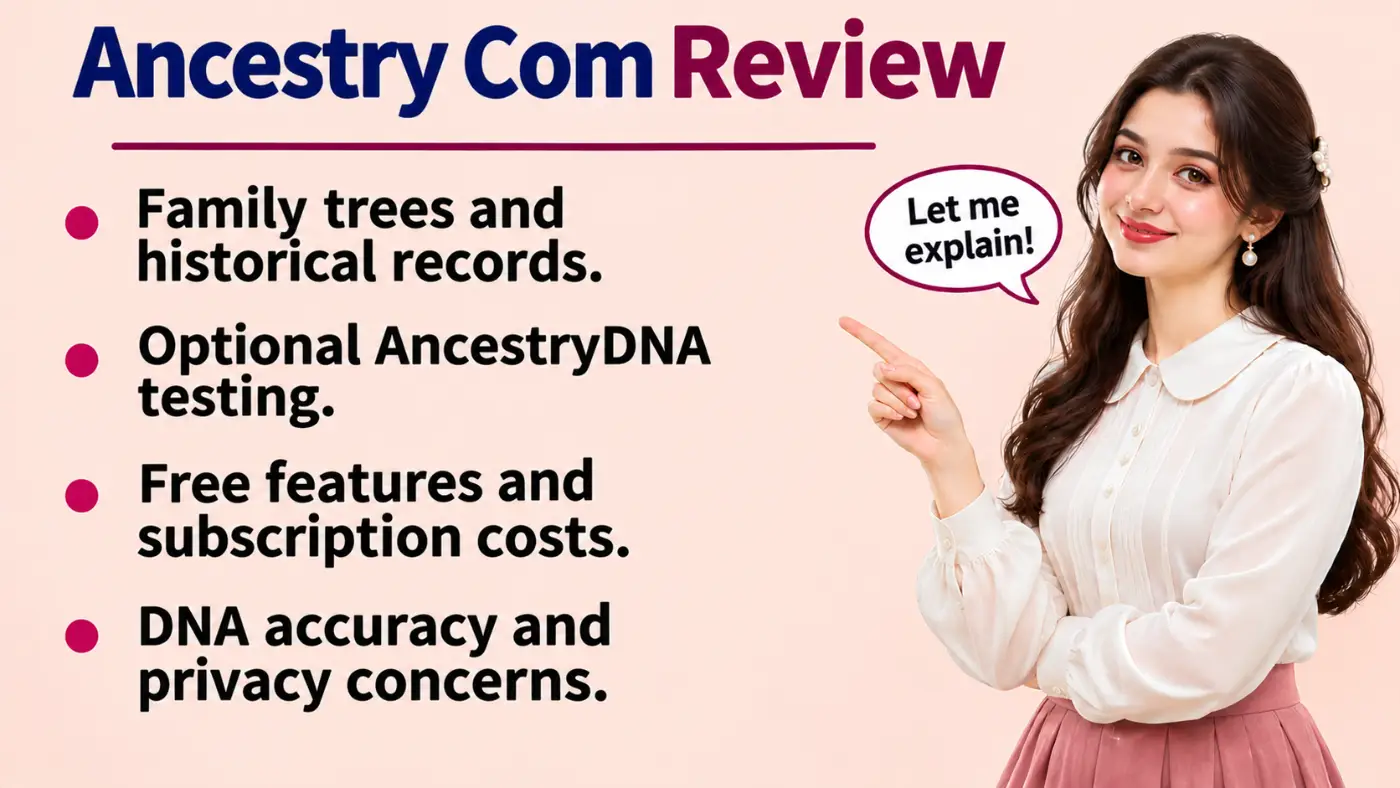
Ancestry com is an online genealogy platform that helps people research their family histories through historical documents, digital family trees, and optional DNA testing. It can connect names in old records to real family stories, but understanding its subscriptions and genetic privacy policies is essential before spending money.
For American families, the platform offers access to census documents, immigration records, marriage certificates, and other historical sources. AncestryDNA adds genetic ancestry estimates and potential connections to biological relatives.
This independent review explains how the service works, what users can do for free, current U.S. membership prices, the reliability of its findings, and when a subscription or DNA kit is genuinely worthwhile.
Related Post: blargz com
What Is Ancestry Com and What Does It Offer?
Ancestry.com combines three related services: historical-record research, online family-tree management, and consumer genetic testing.
Its genealogy database includes census schedules, vital records, passenger lists, military documents, and other materials collected from archives and record providers.
Users build trees by entering known relatives. Ancestry then offers Hints, which suggest potentially relevant documents and connections.
AncestryDNA is a separate purchase that analyzes a saliva sample to estimate genetic ancestry and identify participating genetic relatives.
A DNA kit is not required to create a family tree, and a paid genealogy membership is not necessary to begin documenting relatives.
The platform is particularly useful for people researching American ancestors, immigration histories, and family connections across generations.
Who Owns Ancestry.com and How Has It Developed?
Ancestry’s online genealogy business launched in 1996 and grew into a major provider of digital family-history research.
Its corporate headquarters are in Lehi, Utah. The company expanded from searchable historical documents into collaborative family trees, mobile research, and consumer DNA testing.
In December 2020, investment funds managed by Blackstone completed the acquisition of Ancestry in a transaction valued at approximately $4.7 billion. Singapore’s GIC retained a significant minority investment.
Ancestry is therefore an established commercial company, not an anonymous genealogy website. Its corporate history, however, does not guarantee the accuracy of every family tree or DNA interpretation.
How Does Ancestry Com Work for Beginners?
The easiest approach is to begin with relatives you already know, rather than immediately searching for distant ancestors.
- Create a free account. Register and start a family tree without purchasing a membership.
- Enter known relatives. Add names, approximate birth dates, places, and relationships.
- Start with reliable information. Use family documents, photographs, and conversations with relatives.
- Search historical records. Look for census entries, marriage documents, or immigration records. Many full record collections require payment.
- Review Ancestry Hints. Treat suggested documents as possible leads, not confirmed facts.
- Attach supporting evidence. Connect documents to the correct individuals and record any uncertainties.
- Explore DNA if appropriate. An optional test can help investigate biological connections that written records do not resolve.
Ancestry’s free mobile apps also support research and tree management.
Beginners should prioritize accuracy over the number of names added. A smaller tree supported by documents is more useful than a large tree assembled from unverified suggestions.
Exploring Family Trees and Historical Records
Ancestry’s record collections include census schedules, birth and death records, marriage registers, immigration lists, military materials, city directories, and other historical documents.
Availability depends on location, historical period, record preservation, and licensing.
Some records provide scanned originals. Others offer searchable indexes or transcriptions that may contain mistakes.
A Practical Research Example
Suppose a researcher knows that a great-grandfather named William Carter lived in Ohio around 1930.
A census entry might reveal his age, occupation, birthplace, spouse, and children.
A marriage record could then help establish his wife’s maiden name and the couple’s marriage location.
If the ages, locations, and household relationships agree, the documents strengthen the proposed connection.
This is a hypothetical example, not a documented Carter family investigation.
Family-Tree Evidence Reliability Guide
A scanned marriage certificate or census page generally provides stronger evidence for a particular historical event than an unsourced online family tree.
However, even original documents can contain errors. Names may be misspelled, ages estimated, or family relationships incorrectly reported.
Use multiple independent records before concluding that two people with similar names are the same person.
AncestryDNA Explained: What Can a DNA Test Reveal?
AncestryDNA uses an at-home saliva sample to analyze selected genetic markers.
After laboratory processing, users receive an ancestral origins estimate comparing their DNA with reference populations.
The service can also identify genetic matches with other participating customers who share detectable DNA segments.
These matches may help identify unknown biological relatives or support existing family-history research.
Ancestral journeys and related features can provide additional historical and geographic context when sufficient evidence is available.
Importantly, ethnicity percentages are statistical estimates, not precise measurements of nationality, culture, or personal identity.
Results may change when Ancestry updates its reference populations and analytical methods. Some advanced DNA tools also require an eligible membership.
Genetic matching can reveal unexpected family relationships, including previously unknown parentage. Consumers should consider that possibility before testing.
Ancestry Com Free vs Paid: What Is the Difference?
Ancestry allows meaningful research without payment, although access to its premium records is restricted.

A paid records membership and an AncestryDNA kit are separate purchases.
A person interested only in building a basic family tree may need neither.
Ancestry Subscription Plans and Current Costs
U.S. prices checked November 2, 2026. Standard advertised rates, excluding temporary discounts and taxes.

Ancestry also lists prepaid six-month memberships at $119 for U.S. Discovery, $179 for World Explorer, and $269 for All Access. Annual options are available.
Eligible introductory offers and a 14-day trial may be available. Trials can convert into paid subscriptions unless canceled.
Ancestry states that subscriptions renew automatically and advises canceling at least two days before renewal.
DNA Test vs Membership Decision Guide
Start with a free family tree to organize information about known relatives.
For access to census records and historical documents, consider a short-term records membership.
An AncestryDNA kit may be useful for identifying genetic relatives or exploring ancestral origins.
Buy both only when genetic results and documentary research are relevant to the same investigation.
How Accurate Is AncestryDNA and Family-Tree Research?
Accuracy depends on what is being measured.
Close genetic matches are generally more informative than precise ethnicity percentages, although the exact relationship between two people can remain uncertain.
Ethnicity estimates depend on reference populations, statistical models, and how closely sampled populations resemble the user’s ancestry.
Historical records provide evidence of events, but individual documents may contain errors.
Public family trees introduce another risk: incorrect relationships can spread when users copy information without checking sources.
Ancestry Hints are automated suggestions, not proof of ancestry.
The best research combines genetic evidence, documentary records, geography, dates, and family context.
For populations underrepresented in reference datasets or surviving historical archives, conclusions may be less specific. A missing record or uncertain ethnicity estimate should not be interpreted as evidence that an ancestor did not exist.
Is Ancestry Com Safe and Legitimate?
Ancestry is a legitimate, established genealogy company with identifiable ownership, published subscription terms, and customer support.
Its historical-record and DNA services are real commercial products.
Nevertheless, company legitimacy should be separated from record accuracy, subscription value, and genetic privacy.
Some consumers report frustration with subscription costs, automatic renewals, and changing DNA estimates. Such experiences are useful considerations but do not establish that every customer encounters the same problems.
Before paying, review the checkout total, billing frequency, cancellation deadline, and account security settings.
Use a unique password and available account protections. Treat emails requesting sensitive information cautiously, even when they appear related to genealogy research.
Ancestry DNA Privacy: Who Can See Your Information?
DNA information is unusually sensitive because it can reveal biological relationships involving other people, including relatives who never purchased a test.
Ancestry provides controls for DNA matching visibility, research consent, result sharing, and test deletion.
Users can choose whether to appear to genetic matches and can manage permissions for people invited to view their results.
Family-tree privacy is a separate consideration. Public trees may expose information about deceased relatives, while Ancestry generally restricts public visibility of living individuals.
However, privacy settings do not eliminate the possibility of identification through family connections or information shared elsewhere.
Privacy Before Purchase Checklist
Before submitting a sample, consider these questions:
- Do you want potential biological relatives to discover you?
- Are you comfortable learning about unexpected family relationships?
- Who should be allowed to view or manage your results?
- Do you want to participate in optional genetic research?
- Do you understand how to download or delete your information?
Ancestry says users can delete DNA results, request sample destruction, and withdraw research consent. Previously completed or published research cannot necessarily be reversed.
What Happens When You Cancel Ancestry?
Canceling a paid membership is different from deleting an account.
Ancestry’s terms state that subscriptions renew automatically unless canceled. The company advises completing cancellation at least two days before renewal.
After membership access ends, users generally retain their accounts and family trees, but lose access to subscription-only records and features.
Previously attached premium documents may no longer be viewable without an eligible subscription.
Canceling a records membership does not automatically delete AncestryDNA results.
Deleting an entire account is more consequential because it can permanently remove associated trees, records, and DNA information.
Refund eligibility depends on the purchased product, billing arrangement, and applicable terms. Do not assume every renewed payment is refundable.
Before cancellation, download important records and export your tree if you want a separate backup.
Ancestry Com vs Other Family History Platforms
Ancestry is not the only useful genealogy service.
| Platform | Main Focus | Free Options | DNA Testing | Best Use Case |
|---|---|---|---|---|
| Ancestry | Records, trees, genetic genealogy | Basic trees and selected records | Yes | Combined records and DNA research |
| FamilySearch | Historical records and shared genealogy | Extensive free access | No direct consumer kit | Research without subscription costs |
| MyHeritage | Family trees, international records | Limited free tree and searches | Yes | International family connections |
| Findmypast | British and Irish historical records | Free tree and selected resources | No equivalent standalone DNA kit confirmed | UK and Irish ancestry |
For British or Irish ancestors, a specialized collection may be more useful than a larger general database.
Five Common Mistakes Beginners Make on Ancestry
1. Accepting Every Hint
A matching name is not proof of identity. Compare dates, relatives, locations, and original documents before attaching a record.
2. Treating Ethnicity Estimates as Exact
Genetic percentages are estimates based on reference data. Use historical documents to investigate specific ancestors and family relationships.
3. Ignoring Name Variations
Older records frequently contain spelling differences, nicknames, and transcription mistakes. Search alternative surnames, approximate birth years, and neighboring locations.
4. Forgetting Renewal Conditions
Trials and subscriptions may renew automatically. Record the renewal date and verify cancellation terms before purchasing.
5. Sharing Too Much Family Information
A public tree can reveal sensitive family relationships. Review visibility settings and obtain appropriate permission before sharing information about living relatives.
Who Should Use Ancestry and Who Might Not Need It?
Ancestry is particularly valuable for researchers who regularly need historical records, people investigating immigrant ancestors, and families combining documentary research with genetic matches.
Experienced researchers may benefit from broader international collections and specialized tools.
However, beginners with a limited research question should start with free resources before purchasing an expensive plan.
FamilySearch, public libraries, local archives, and government records may provide the necessary evidence without recurring fees.
A short subscription can make sense when you have specific documents to investigate. Continuous membership offers better value when research is ongoing and the collections remain useful.
Frequently Asked Questions
Can I search for my ancestors without paying?
Yes. A free account allows users to create family trees and search selected record collections. Many premium document images and detailed records require a paid membership. FamilySearch and public archives can provide additional free evidence.
Do I need a subscription to see my DNA results?
No. After purchasing and activating an AncestryDNA kit, users can access core ancestral origins, journeys, and DNA matches without maintaining a records subscription. Some advanced relationship tools and additional DNA insights require an eligible membership.
Can genetic testing identify unknown relatives?
Yes. DNA matching may reveal biological relatives who have also participated in AncestryDNA and enabled matching. The service cannot identify every relative, and shared DNA does not always establish one exact relationship without additional evidence.
Will my family tree disappear if I cancel?
No. Ancestry states that your family trees remain available after membership cancellation. You can continue editing them, but subscription-only record images may become inaccessible. Deleting your account, rather than canceling membership, can permanently remove your information.
How far back can historical records go?
Record coverage varies considerably by location and document type. Some collections extend back centuries, while others begin much later. Reliable family research depends on surviving documentation, not a guaranteed number of generations that any service can uncover.
Can other people view my family information?
Visibility depends on your tree settings, sharing permissions, and whether information concerns living or deceased people. DNA matching has separate controls. Review both sets of privacy options before publishing family information or inviting collaborators.
Is a DNA test required to create a family tree?
No. Ancestry supports family-tree creation using names, dates, photographs, and historical documents. DNA testing is optional and is most useful when researching biological relationships or genetic ancestry.
Why do ethnicity estimates sometimes change?
Ancestry updates its reference populations and analytical methods. New comparisons may produce different regional estimates even though your underlying DNA has not changed. These updates reflect revised statistical interpretations rather than changes to your biological ancestry.
Can I export my family-tree information?
Yes. Ancestry supports exporting family-tree information as a GEDCOM file. This is useful for backups or moving genealogical data between compatible services. GEDCOM files may not preserve every attached image or proprietary record.
How do I stop automatic membership renewal?
Open Account Settings, select the membership cancellation option, and complete the process until you receive confirmation. Ancestry recommends canceling at least two days before renewal. Some installment plans may carry early-cancellation charges, depending on their terms.
Final Verdict: Is Ancestry Com Worth Using?
Ancestry com offers a powerful combination of historical records, family-tree tools, and genetic genealogy services.
Its greatest strength is bringing documentary research and DNA matching into one platform. However, premium subscriptions can become expensive, automated hints require verification, and genetic testing introduces significant privacy considerations.
The most practical starting point is a free family tree supported by reliable documents.
Purchase a records membership when specific collections are needed, and consider AncestryDNA when biological connections are an important research goal.
For occasional genealogy questions, free archives may be sufficient. For sustained family-history investigations, Ancestry can provide substantial value when its costs and limitations are understood.

Sophia Bennett writes educational content about English vocabulary, grammar, slang, and communication. She is passionate about making complex language topics accessible to students, professionals, and curious readers around the world.