Aide vs Aid: The Person Who Helps and the Help Itself
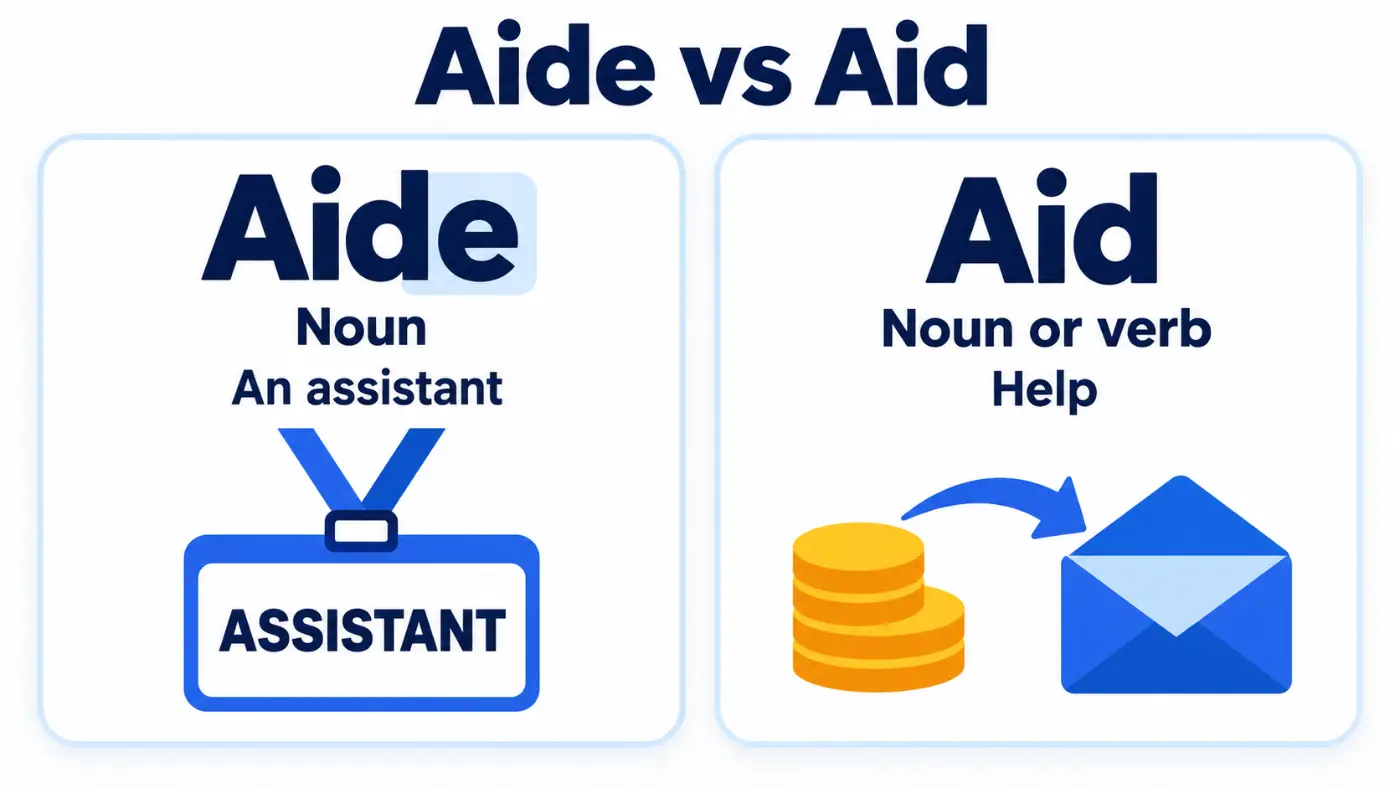
Aide is a noun for a person who assists someone, such as a political aide or a teacher’s aide. Aid is help itself, either as a noun (financial aid) or as a verb (to aid a rescue). If you can swap in assistant, write aide, and if you can swap in help, write aid.
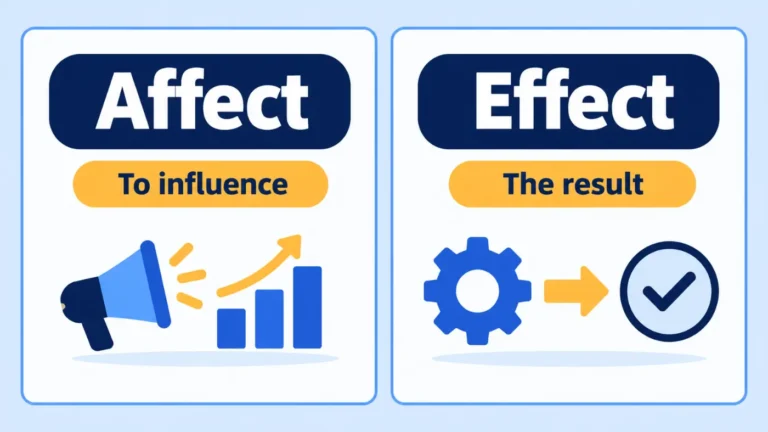
Related Post: affect vs effect
The Short Answer at a Glance
| Word | Part of Speech | Meaning | Example |
|---|---|---|---|
| Aide | Noun | A person who assists someone | The mayor’s aide called three times before lunch. |
| Aid | Noun and verb | Help, or a tool that helps; to help | A visual aid can make a hard lesson easier to follow. |
The two words sound exactly alike. Only the spelling and the meaning separate them.
What Aide Means and How It Works
Aide is a noun that names a person whose job is to assist someone else. The word fits many settings: a political aide who manages a schedule, a classroom aide who supports students, and a home health aide who visits patients.
The plural is aides, as in the senator employs three aides. Aide almost always appears with a title or a role. You’ll see a legislative aide, a nurse’s aide, a senior aide, or an aide to the governor.
The word comes from French, and the final e marks that origin. It also appears in a few borrowed phrases. Aide de camp names a military officer who serves as a personal assistant to a senior commander.
Aide has no verb form. You can’t aide someone, and you can’t use it for help in general. Whenever the sentence needs a person, aide is the word.
What Aid Means and How It Works
Aid is a word for help. As a noun, it names the help itself, as in financial aid, foreign aid, or legal aid. It can also name a tool that helps, as in a hearing aid, a visual aid, or a study aid.
As a verb, aid means to help or assist. The forms are aid, aids, aided, and aiding. You can aid a rescue effort, aid digestion, or aid a neighbor in need.
The noun can be countable or uncountable. A hearing aid is countable, so you can have two hearing aids. Financial aid is uncountable, so you say a lot of aid, not many aids.
Aid appears in many fixed phrases. First aid, aid and abet, come to the aid of, and aid worker all use it. In each case, the word refers to help, never to a person.
Aide vs Aid: Key Differences Side by Side
| Feature | Aide | Aid |
|---|---|---|
| Part of speech | Noun | Noun and verb |
| Core meaning | A person who assists | Help; a tool for help; to help |
| Typical use | Jobs and roles | Assistance, funding, devices |
| Forms | Aide, aides | Aid, aids, aided, aiding |
| Example | The classroom aide read with two students. | The county approved $2 million in disaster aid. |
The table makes the split look simple, and it is. The mix up comes from sound, since the two words are homophones, which means they sound the same but differ in spelling and meaning.
What the table can’t show is how often the two words appear together. A teacher’s aide can hand out visual aids, and a campaign aide can request aid for a charity. Each word keeps its own job in the same sentence.
Correct Examples in Real-Life Contexts
Aide
- Everyday speech: The mayor’s aide called three times before lunch.
- Texting: my mom’s a teacher’s aide at the elementary school lol
- Workplace writing: Each senator employs a legislative aide to track bills in committee.
- School or academic: The classroom aide helped two students with the reading exercise.
- Formal writing: The governor appointed a longtime aide as chief of staff.
- Healthcare: A home health aide visits twice a week to help with meals and bathing.
Aid
- Everyday speech: The hearing aid fits so well that Grandpa forgets he’s wearing it.
- Texting: do u have a first aid kit in the car?
- Workplace writing: The finance office can help you apply for tuition aid before the deadline.
- School or academic: A labeled diagram works as a visual aid when you explain the water cycle.
- Formal writing: The treaty commits both countries to aid each other during natural disasters.
- Verb use: A cup of ginger tea may aid digestion after a heavy meal.
Common Mistakes People Make (and How to Catch Them)
Mistake 1: Using aid for a person. Wrong: The senator’s aid resigned on Friday. → Right: The senator’s aide resigned on Friday. The words sound the same, and aid is the more common spelling. A person who resigns needs aide.
Mistake 2: Using aide for help. Wrong: The agency sent foreign aide to the region. → Right: The agency sent foreign aid to the region. The extra e can look more professional, so writers overcorrect. Help in general takes aid.
Mistake 3: Writing first aide. Wrong: Is there a first aide kit in the car? → Right: Is there a first aid kit in the car? A kit holds supplies for help, not a person. The phrase first aid always uses the short spelling.
Mistake 4: Writing hearing aide. Wrong: He misplaced his hearing aide again. → Right: He misplaced his hearing aid again. A hearing aid is a device that helps. It’s a thing, so it takes the short form.
Mistake 5: Writing teacher’s aid. Wrong: The teacher’s aid helped two students with reading. → Right: The teacher’s aide helped two students with reading. The person assists the teacher, so the word needs the final e. A teaching aid, by contrast, is a tool.
Mistake 6: Pluralizing the wrong word. Wrong: The charity provides financial aides to families. → Right: The charity provides financial aid to families. Financial aid is uncountable, so it has no plural. Aides would mean several assistants.
Mistake 7: Trusting the spellchecker. Both words are real, so no tool will underline the wrong one. Reread every sentence that contains either.
A Fast Trick to Choose Between Aide and Aid
Swap in assistant or help. If assistant fits, write aide. If help fits, write aid.
Try it on a real sentence. The mayor’s ___ called three times. Assistant fits, so the answer is aide. The county approved disaster ___ after the storm. Help fits, so the answer is aid.
A spelling hook can back up the test. Aide ends in ide, like guide, and both words name people who help others. Aid is short and plain, like the help itself.
A second hook uses the extra letter. Aide has an extra e, like an extra pair of hands in the room.
The trick has limits. Aid also names tools and devices, so a hearing aid is a thing and not a person. If you’re unsure, ask whether you could shake hands with it. If so, write aide.
How They Sound in Real Situations
A text exchange
Priya: Who’s the woman standing next to the mayor? Dev: Her aide, I think. She handles the schedule. Priya: Got it. Do we need a first aid kit for the event?
Aide names a person who assists the mayor. Aid is part of the fixed phrase first aid kit.
An email snippet
Subject: Tuition support
Hi Elena, I spoke with the council member’s aide, and she confirmed the deadline for the tuition aid application. Please send the signed forms by Friday. I’ll forward the receipt once the office confirms.
Aide names a person. Aid names the financial help.
An article excerpt
The county approved $2 million in aid after the storm flooded the lower valley. A mayoral aide said the first payments would reach families within three weeks.
Aid is a noun for money and help. Aide is a noun for the mayor’s assistant.
Formal Writing vs Casual Writing
Register doesn’t change the choice. Aide and aid are standard in academic papers, business emails, journalism, social media, and texts. The meaning decides the spelling in every setting.
Journalism uses aide often for political and government staff. A news story may refer to a presidential aide, a campaign aide, or a senior aide. Style guides keep the distinction, so a story that writes aid for a person usually gets corrected.
In casual writing, the slip is more common because the words sound the same. A quick reread catches it.
US vs UK English Differences
The spelling of aide and aid is the same in American and British English. A real difference appears in the nearby vocabulary.
American schools use teacher’s aide or classroom aide for a staff member who supports a teacher. British schools more often say teaching assistant. American healthcare uses home health aide, while British usage often prefers carer or care worker.
British English also has the phrase in aid of, which means to raise money for a cause, as in a concert in aid of the local hospice. American writers more often say to benefit or in support of.
British speakers also use first aider for a person trained in first aid. That form uses the short word, and the suffix er marks the person.
Related Mix-Ups People Also Search For
Aid vs Assist
Aid and assist both work as verbs that mean help. The word aid is shorter and often sounds a little more formal. Assist, by contrast, often points to a smaller or more specific kind of help.
The new software will aid the team, and a volunteer will assist with the setup.
Aide vs Assistant
Aide and assistant both name a person who helps. The word aide sounds more specific to politics, schools, and healthcare, while assistant is the general term. An assistant, by comparison, can work in many settings.
The principal hired a classroom aide and an office assistant.
Aid and Abet
Aid and abet is a legal phrase that means to help someone commit a crime. The words are a fixed pair, and aid is the verb. Aide has no place in that phrase.
The charge accused him of helping to aid and abet the scheme.
Exceptions, Edge Cases, and Tricky Situations
Aide de camp. This phrase names a military officer who serves as a personal assistant to a senior commander. It borrows the French spelling and uses aide, because the word names a person.
Aide memoire. This borrowed phrase names something that helps you remember, such as a list or a note. It uses aide even though the meaning is close to memory aid. It’s a French phrase, so the spelling follows French.
Aid as a countable noun. A hearing aid is a device, so it can be plural. Hearing aids, teaching aids, and visual aids are standard.
Aid as an uncountable noun. Financial aid and foreign aid take no plural. You say a lot of aid, not many aids.
First aider. In British usage, a first aider is a trained person, but the word is built on the noun aid with the suffix er. It doesn’t use the spelling aide.
Brand names. A brand may spell the word in its own way, as in a bandage brand. Follow the brand’s spelling when you refer to it.
Quick Practice: Test Yourself
Choose aide or aid for each sentence.
- The senator’s ___ drafted the speech overnight.
- A flashlight is a handy ___ in a power outage.
- Is there a first ___ kit in the car?
- The county approved $2 million in disaster ___.
- The classroom ___ helped two students with reading.
- Which is correct? A) hearing aide B) hearing aid
Answer key
- Aide. It names a person who assists the senator.
- Aid. It names a tool that helps.
- Aid. First aid is a fixed phrase for help.
- Aid. It names money and help, not a person.
- Aide. It names a person who supports the class.
- B. A hearing aid is a device that helps.
Frequently Asked Questions
Is it aid or aide?
Aide is a person who assists someone, and aid is help itself. Swap in assistant for aide and help for aid.
Is it first aid or first aide?
First aid is correct. The phrase refers to help, not a person.
What is a teacher’s aide?
A teacher’s aide is a staff member who supports a teacher in the classroom. The word aide names the person.
Is it hearing aid or hearing aide?
Hearing aid is correct. It’s a device that helps, so it takes the short spelling.
Are aid and aide pronounced the same?
Yes. Both words sound like the word ade, so only the spelling and meaning separate them.
What is the plural of aide?
The plural is aides. Aid can be plural only when it names devices, as in hearing aids.

Sophia Bennett writes educational content about English vocabulary, grammar, slang, and communication. She is passionate about making complex language topics accessible to students, professionals, and curious readers around the world.