
Inquiry vs Enquiry: Which Spelling Should You Use
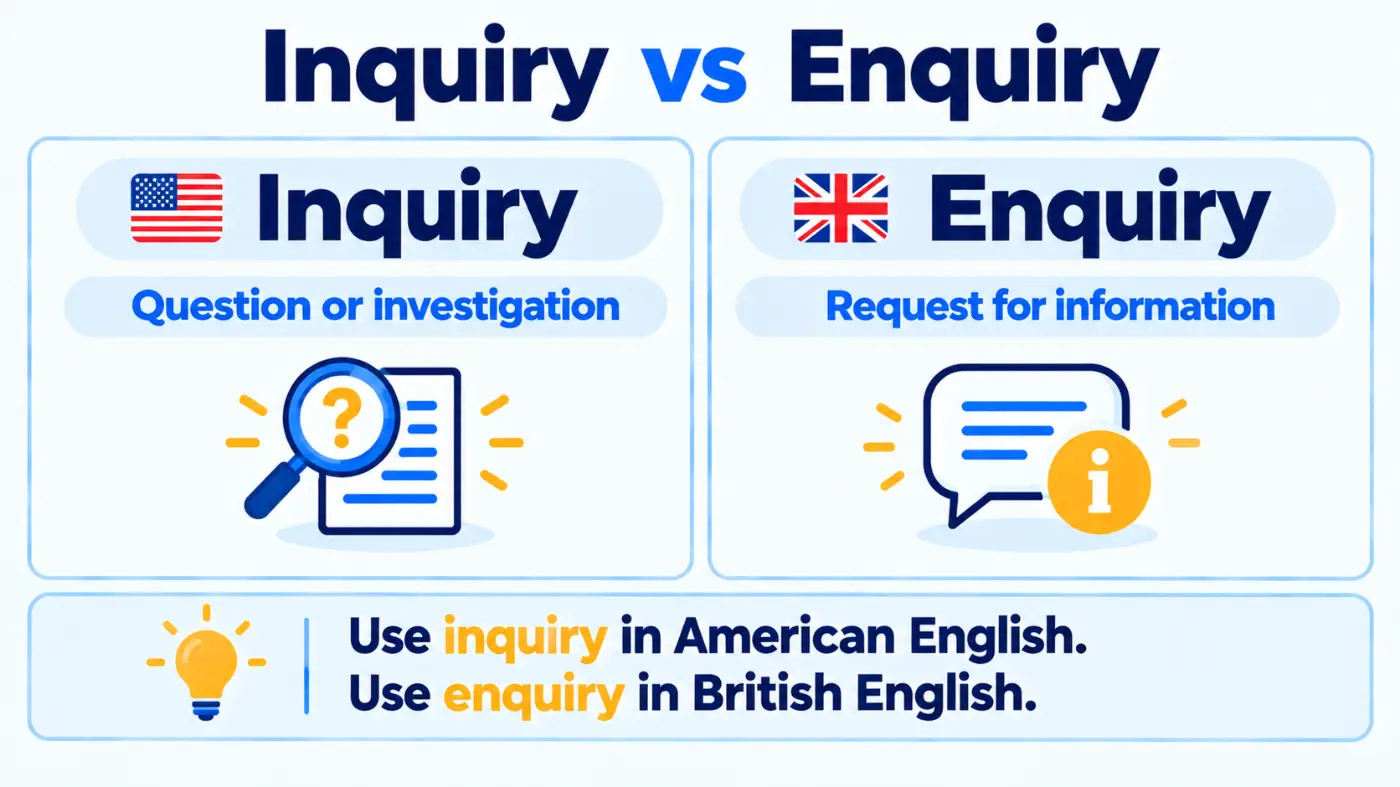
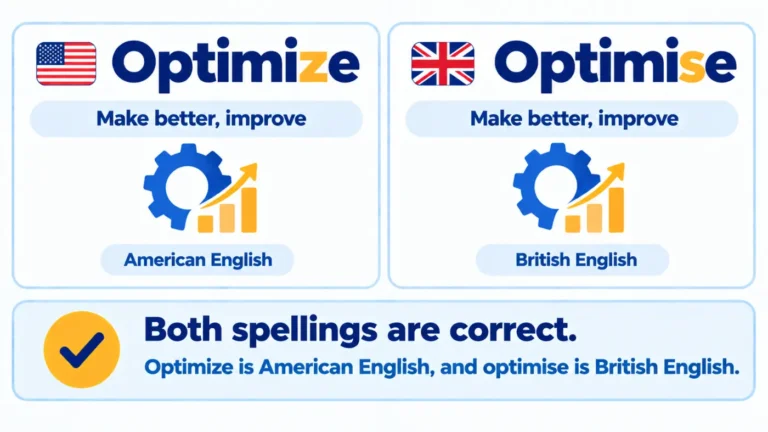
Inquiry is the standard American spelling for every sense of the word, from a simple question to a formal investigation. Enquiry is the British spelling for a general request for information, while British writers usually keep inquiry for official investigations. If your readers are American, write inquiry.
The Short Answer at a Glance
Both spellings are real, and they’re the same word. Your audience decides which one fits.
| Spelling | Where it’s standard | Example |
|---|---|---|
| Inquiry | The United States for all senses. In Britain, mostly for formal investigations. | Priya sent an inquiry to the venue about weekend availability. |
| Enquiry | Britain, for everyday questions and requests for information. | Please direct all enquiries to the front desk. |
What Inquiry Means and How It Works
Inquiry is a noun with three main meanings. It can be a question or request for information, a formal investigation, or the general act of asking and looking into something. The plural is inquiries.
In American English, one spelling covers all three. A customer who emails a store has made an inquiry. A Senate panel that looks into a contract has opened an inquiry. A scientist following a hunch is engaged in scientific inquiry. Nobody needs a second spelling to tell those situations apart.
You’ll see inquiry in steady patterns. People make an inquiry, respond to an inquiry, and launch an inquiry into something. A line of inquiry is a direction of questioning. A public inquiry is an official investigation into a matter of public concern.
The matching verb is inquire, and it follows the same spelling logic. Pronunciation varies from speaker to speaker, and the spelling stays the same either way.
What Enquiry Means and How It Works
Enquiry is the British spelling of the same noun, and it’s the usual choice in Britain for a general question or request for information. The plural is enquiries, and the matching verb is enquire.
British businesses and public services use it constantly. A hotel has an enquiries desk. A website has an enquiry form. A press office handles media enquiries. In each case, someone wants information, and nothing official is being investigated.
British writers often draw a line between the two spellings. Enquiry tends to cover everyday questions, and inquiry tends to cover formal investigations, as in a public inquiry. That pattern is common, but it isn’t a strict rule. Plenty of British writers and institutions use inquiry for both senses.
In American writing, enquiry looks foreign. It appears in British brand names, imported websites, and quoted material, and an American reader will understand it without trouble. It simply signals a British voice.
Inquiry vs Enquiry Key Differences Side by Side
| Feature | Inquiry | Enquiry |
|---|---|---|
| Part of speech | Noun. | Noun. |
| Core meaning | A question, a request for information, or an investigation. | A question or request for information. |
| Typical US use | The only spelling most Americans use. | Rare, and usually a sign of British style. |
| Typical UK use | Formal investigations, and sometimes everyday questions too. | Everyday questions and requests. |
| Plural | Inquiries. | Enquiries. |
| Matching verb | Inquire. | Enquire. |
| Register | Fits every setting. | Fits every setting in British writing. |
| Example | The agency opened an inquiry into the delayed shipments. | The shop answered every enquiry within a day. |
The table can’t show how much the choice depends on the reader. A British university might use inquiry for a misconduct investigation and enquiry for an admissions question on the same web page. The table also can’t capture how firmly the two spellings stay together. If you write enquiry, the matching verb should be enquire, and the plural should be enquiries.
Correct Examples in Real Life Contexts
Inquiry in Action
- Everyday speech: Marisol left a voicemail about her inquiry into the used minivan, then waited all afternoon for a callback.
- Workplace writing: Customer inquiries about the new billing portal doubled the week after launch.
- Texting: Sent my inquiry to the landlord this morning and still nothing.
- School: Dr. Wen asked students to pick a line of inquiry before they chose a lab topic.
- Formal writing: The Senate subcommittee opened an inquiry into how the agency handled the contract.
- Science: Scientific inquiry depends on testing ideas that could turn out wrong.
Enquiry in Action
- Hotel desk in Manchester: Guests with a room enquiry can ring reception any time before midnight.
- Workplace in Leeds: All press enquiries should go to the communications team.
- Texting: Quick enquiry for you, does the gym offer a student rate?
- School in Bristol: The sixth form office handles every enquiry about open days.
- Local government: The council acknowledged the resident’s enquiry within five working days.
Common Mistakes People Make and How to Catch Them
- Using enquiry in American business writing. Wrong → Please send all enquiries to the support team. Right → Please send all inquiries to the support team. A British website, template, or language setting often supplies the spelling without anyone noticing.
- Mixing spellings in one document. Wrong → We received one inquiry and two enquiries today. Right → Pick one spelling and keep it throughout. Switching reads like a typo.
- Using the noun as a verb. Wrong → I’ll inquiry about the schedule tomorrow. Right → I’ll inquire about the schedule tomorrow. The noun and the verb differ at the end.
- Dropping the u. Wrong → inqiry. Right → inquiry. The letter q almost always travels with a u in English.
- Adding an extra vowel at the end. Wrong → inquirey. Right → inquiry. Writers spell by ear and borrow the ending from words like bakery.
- Applying the British pattern in reverse. Wrong → The Grenfell Tower Enquiry. Right → The Grenfell Tower Inquiry. Formal investigations in Britain typically carry the inquiry spelling, and official names keep it.
- Trusting spellcheck. Wrong → Assuming the software will flag the wrong regional form. Right → Check the spelling yourself. Some US spellcheckers flag enquiry, and others accept it.
- Switching spellings to sound polished. Wrong → Using enquiry in a US memo to sound more formal. Right → Use inquiry. A regional spelling doesn’t add formality.
A Fast Trick to Choose the Right One
Start with your reader. If your audience is American, write inquiry every time. That one decision covers almost every sentence you’ll write.
If your audience is British, start by asking whether the sentence is about a formal investigation. Inquiry is the safer choice when it is. For an everyday question or request, enquiry fits well.
For a quick memory aid, picture the E in enquiry standing for England. The I in inquiry is the one you can use anywhere in the American market.
The trick has limits. The British distinction is a tendency, not a law, so don’t be surprised to see inquiry used for everyday questions in British writing. When you work with a British publisher, follow its house style.
How Inquiry and Enquiry Sound in Real Situations
A text exchange
Leah: Did the storage unit place ever answer you?
Omar: Not yet. I sent my inquiry on Monday, and they still haven’t called.
Leah: Try the main line. Inquiries sometimes get buried in their inbox.
Both uses are everyday requests for information, and American spelling uses inquiry for them.
An email snippet
Hi Tom, thanks for your inquiry about the group rate. We can offer a discount for parties of ten or more, and I’ve attached the rate sheet. If you have other inquiries before Friday, please reply here and I’ll respond the same day.
The writer uses inquiry for both mentions because the audience is American.
An article excerpt
The public inquiry heard from engineers, residents, and council officers over several weeks. Outside the hearing room, staff fielded hundreds of enquiries from worried neighbors who wanted to know when the report would be published.
This is British style at its most consistent. Inquiry names the formal investigation, and enquiries names the everyday questions from residents.
Formal Writing vs Casual Writing
Register doesn’t change the spelling. Region does. Inquiry works in a text, a business email, a news story, and a legal brief. Enquiry works the same way in British versions of each.
American dictionaries and newsroom style guides list inquiry as the standard form. Chicago generally follows the main American dictionary, so it points to inquiry as well. If you’re writing for an American publication, there’s no reason to reach for enquiry.
Quotations and official names keep their original spelling. If a British source writes enquiry, an American essay quotes it exactly.
Inquiry vs Enquiry in American and British English
The difference is real, and it follows geography.
| Setting | Usual spelling | Notes |
|---|---|---|
| United States | Inquiry | Used for every sense. |
| United Kingdom | Enquiry for general questions, inquiry for formal investigations | A strong tendency, not a strict rule. |
| Canada | Usually inquiry | Follows American habits more often than British ones. |
| Australia and other Commonwealth countries | Often follows the British pattern | Usage varies by publication and institution. |
Even in Britain, the line can blur. Some British organizations use inquiry for every sense, and some British readers find that perfectly natural. The reliable rule is simple. Choose the spelling your audience expects, and use it consistently.
Related Mix Ups People Also Search For
Inquire vs Enquire
These are the verb forms, and they follow the same regional split. Americans write inquire, and British writers often write enquire. The writer should inquire about parking before the event.
Inquiry vs Query
A query is a short question or request, often one asked of a system or an expert. An inquiry can be a query, but it can also be a long, formal investigation. A database processes a query, and a committee conducts an inquiry.
Inquiry vs Investigation
An investigation is a careful, often official search for facts. An inquiry may be the same thing or may be a simple request for information. A reporter’s investigation uncovered the error, and the agency’s inquiry followed.
Inquiries vs Enquiries
The plural forms follow their singular partners. Americans write inquiries, and British writers often write enquiries. A website footer might say Press inquiries or Press enquiries, depending on the audience.
Exceptions Edge Cases and Tricky Situations
- Official names keep their spelling. The Leveson Inquiry and the Grenfell Tower Inquiry use the inquiry spelling no matter who writes about them.
- Brand and button text varies. A British retailer may label a contact page Enquiries, and an American company may label a similar page Inquiries. Quote the label exactly when you mention it.
- Quotations stay untouched. If you’re citing a British source, preserve its spelling.
- Some British writers use inquiry for both senses. That choice is acceptable, and it reflects personal or house style.
- Mixed audiences need a decision. If a website serves both American and British readers, pick one standard in your style guide and apply it everywhere.
- The verb and noun should match. If you write enquiry, use enquire and enquiries throughout.
- Scientific inquiry is a fixed phrase. It appears in American and British writing with the inquiry spelling.
- Line of inquiry is another fixed phrase, and writers on both sides of the Atlantic usually spell it the same way.
Quick Practice Test Yourself
Choose the spelling a US editor would use, unless the sentence says otherwise.
- Thank you for your ____ about our summer classes.
- The county launched an ____ into the water contamination.
- A hotel in Edinburgh posts a sign that says, Reception handles every ____.
- Choose the correct verb for American writing: inquire or enquire.
- The ____ desk in a London department store answered questions all day.
- Which spelling is correct for the plural in a US email? Inquiries or Enquiries.
Answer Key
- Inquiry. It’s a request for information in American writing.
- Inquiry. It’s an investigation, so every style guide agrees.
- Enquiry. The sentence is British and describes an everyday question.
- Inquire. It’s the standard American verb.
- Enquiries. The setting is British and the desk handles general questions.
- Inquiries. The American plural matches the American singular.
Frequently Asked Questions
Is it inquiry or enquiry in American English?
It’s inquiry. American dictionaries and style guides treat enquiry as a British variant.
Is enquiry wrong?
No. It’s a standard British spelling, and it’s perfectly correct for British audiences.
What is the difference between inquiry and enquiry in the UK?
British writers often use enquiry for general questions and inquiry for formal investigations. The pattern is common, but plenty of writers use inquiry for both.
Do inquire and enquire mean the same thing?
Yes. They’re spelling variants of the same verb, and the choice follows the same regional pattern as the noun.
Should I use inquiry or enquiry on a website for international visitors?
Choose the spelling your main audience expects and use it consistently. If you have no clear majority, American inquiry is the more widely recognized choice.
Is it public inquiry or public enquiry?
It’s public inquiry. The phrase names a formal investigation, and that sense carries the inquiry spelling in British and American writing.

Sophia Bennett writes educational content about English vocabulary, grammar, slang, and communication. She is passionate about making complex language topics accessible to students, professionals, and curious readers around the world.
One Comment